Arthurian Mythology List


Welcome to the Mythopouch list of Arthurian Legend mythology entries! We also delve into the early history of Britain, Wales, and the Celtic and medieval traditions that shaped the Arthurian world. From kings, queens, knights and mages to castles, quests, monsters, artefacts, weapons, enchanted objects, creatures and more, this collection will continue to grow over time. Mythopouch provides real-world background and mythological information drawn from early chronicles, Welsh tales and medieval romances such as: the Welsh Triads, Culhwch and Olwen, the Historia Brittonum, the Annales Cambriae, Geoffrey of Monmouth, Chrétien de Troyes, the Lancelot-Grail or Vulgate Cycle, Sir Gawain and the Green Knight, and Thomas Malory’s Le Morte d’Arthur. Arthurian legend carries powerful ideas about courage, honour, loyalty, temptation, sacrifice, prophecy, betrayal and the dream of a better kingdom - messages passed from storyteller to storyteller for centuries, many of which still speak to modern life. Our unique imagery is meant to capture the imagination and ignite the Arthurian spark within us all. Our “token mark” coin symbol assigned to each record is a visual representation of the entity, for use in Mythopouch learning modules and games.
"Nothing is given, everything is earned" at Mythopouch!
Learn - Earn - Play
Arthurian Entity Quick Index
Our current list of ancient British mythology (Arthurian Legend) and ancient history entities are here - which are growing day by day!
Search by using the:
-
"Search Mythology Records" function to browse all mythology records and blog pages;
-
Browse the visual cards with overviews by clicking "Go to Visual A-Z";
-
Or just browse and click the A-Z entries below....
See more list entries
Read Arthurian Legend Insights
Click below to view our Arthurian Legend (ancient British) mythology blog article insights, where we delve into the current Mythopouch Tier regions and what we think you should know!


Arthurian Entity Card Index
See more card entries
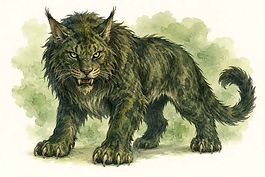
Cath Palug
Believing Beaumains to be no more than a kitchen servant, Percard intends to unhorse him and claim his horse and armour. Gareth declares that he is a gentleman of higher lineage than Percard and insists that he will pass. Their encounter becomes a deadly fight: Percard’s spear breaks, Gareth drives his own spear through Percard’s body, and the Black Knight continues fighting with his sword before collapsing and dying.

Cauldron of Rebirth
The Cauldron of Rebirth, known in Welsh as Pair Dadeni, is the vessel that restores dead warriors to life in the Second Branch of the Mabinogi, the tale of Branwen. Its gift is incomplete: those placed inside return the next day without the ability to speak. The cauldron passes from the mysterious Llasar Llaes Gyfnewid and his wife Cymydei Cymeinfoll to Bran, also called Bendigeidfran, and then to the Irish king Matholwch as part of an attempt to repair a damaged marriage alliance. When war follows, the vessel becomes a weapon against Bran's own people. Efnysien eventually destroys it from within and dies in the act. This record concerns that particular cauldron. The vessels associated with Annwn, Diwrnach, Ceridwen and the Dagda belong to related but distinct stories and are not interchangeable alternative names. The Cauldron of Rebirth is a mythological object whose power makes the conflict more terrible rather than providing an uncomplicated victory over death.

Caw of Pictland
Caw of Pictland is the Pictish warlord who rode at King Arthur's side during the greatest hunt in Welsh legend, the father of twenty sons and one daughter whose descendants include both saints and the fiercest warriors of Arthurian tradition. He is the giant of Strathclyde, a figure so formidable that the chief giant Ysbaddaden would accept no other barber to shave his beard, flesh, and skin down to the bone. He is the warrior who mounted Arthur's own mare Llamrei and swung a hatchet to split the head of Ysgithyrwyn Chief Boar, claiming the white tusk that would become the razor of a giant. He is the father of Gildas, the monk whose pen condemned Britain's kings, and of Hueil, the battle-diademed warrior who defied Arthur himself and died by the king's hand. And he is the progenitor of a Pictish dynasty so vast that the Welsh Triads name him as the father of a line of saints, a reminder that the northern wilderness beyond Hadrian's Wall produced not only raiders but also the holy men who converted the Britons.

Celliwig
Celliwig is one of the early named courts of King Arthur in Welsh tradition, associated with Cernyw, usually understood as Cornwall. It belongs to the Arthurian world of Culhwch and Olwen and the Welsh Triads, where kinship, hospitality and a remarkable company of warriors matter more than the familiar architecture of later Camelot. Culhwch's arrival at Arthur's court brings him before the formidable gatekeeper Glewlwyd Gafaelfawr and introduces the family connection that makes his appeal for help possible. The triadic tradition also remembers Celliwig as a royal seat and as the setting of violence against the queen. Its exact location is not established. Proposals have connected the name with Cornish hillforts and other places, but none securely identifies a historical palace of Arthur. Celliwig should therefore be treated as a legendary court, not as another name for a proven archaeological site. Its importance lies in preserving a specifically Welsh and Cornish strand of the Arthurian landscape alongside the more widely familiar court of Camelot.

Chalice Well
Chalice Well is the sacred spring at the foot of Glastonbury Tor in Somerset, the natural chalybeate well whose iron-rich water flows red as blood and has been venerated for at least two thousand years. It is the well where legend says Joseph of Arimathea, the man who buried Christ in his own tomb and caught the blood of the crucifixion in the cup of the Last Supper, hid the Holy Grail beneath the earth and caused the waters to turn crimson. It is the spring whose reddish hue and metallic taste have been explained by Christians as the rusty nails of the crucifixion and by pagans as the menstrual blood of the earth goddess, a convergence of beliefs that makes it one of the most spiritually contested sites in Britain. It is the well that never runs dry, pouring twenty-five thousand gallons of warm red water every day even through the worst droughts, its temperature always higher than the surrounding ground. It is the garden sanctuary where the well cover designed by Frederick Bligh Bond displays the Vesica Piscis, two interlocking circles pierced by a sword, the ancient symbol of sacred union between heaven and earth. And it is the heart of the landscape that many call Avalon, the Isle of Apples, the place where King Arthur was taken to be healed and where the boundary between the mortal world and the Otherworld is said to be thinnest.

Chrétien de Troyes
Chrétien de Troyes is the medieval French poet whose five surviving Arthurian romances helped define the form of courtly romance in the twelfth century. He is the author of Erec and Enide, Cligés, Lancelot, Yvain and the unfinished Perceval. His Lancelot gives the love of Lancelot and Guinevere one of its earliest surviving full literary treatments, while Perceval introduces the mysterious Grail procession that later writers transformed into the Holy Grail quest. He wrote Lancelot for Marie, Countess of Champagne, who supplied its subject and governing idea, and Perceval for Philip of Flanders, who supplied a source book. Beyond those statements in his own works, very little of Chrétien's biography is secure. His romances nevertheless became foundational texts for later French prose cycles, German adaptations and the Arthurian tradition inherited by writers such as Thomas Malory.

Cilydd
Cilydd is the father of Culhwch in Culhwch and Olwen, one of the earliest surviving Arthurian tales. Introduced as the son of Celyddon Wledig, he marries Goleuddydd, daughter of Anlawdd Wledig, and becomes part of the extended family surrounding King Arthur. His first marriage produces the hero, while his second creates the difficulty that drives the adventure. After Goleuddydd's death, Cilydd must wait for a particular briar to grow on her grave before he can marry again. When that condition is fulfilled, he kills King Doged and takes the dead king's widow into his household. Her later demand that Culhwch marry her daughter leads to a refusal and a binding condition: he may marry only Olwen. Cilydd then directs his distressed son to Arthur for help. His story is a domestic prologue to an extraordinary quest, combining family loyalty, a promise to the dead, violence and the consequences of remarriage. He belongs to Welsh legendary narrative, not securely documented royal history.

Clamadeu
Clamadeu is the besieging ruler defeated by the young Grail hero in the Perceval tradition. In Chrétien de Troyes's romance, his campaign threatens Blancheflor and her stronghold of Beaurepaire. Wolfram von Eschenbach reshapes the episode in Parzival, calling the ruler Clamide and the besieged queen Condwiramurs. There the city is Pelrapeire, and Clamide's determination to obtain the queen brings hunger and devastation to her people. Parzival defeats the king's seneschal and then the king himself, ending the siege and sending the defeated ruler to Arthur's court. Wolfram does not leave him as a vanquished obstacle. His service to Cunneware, the maiden punished after laughing at Parzival, develops into a new attachment and an eventual marriage. The story moves from a destructive attempt to possess one woman towards an accepted place beside another. Clamadeu belongs to medieval Arthurian romance rather than documented kingship, and his French and German adventures need to be read as related versions rather than one seamless biography.

Claudas (King)
King Claudas is the ruthless Frankish warlord whose conquest of two kingdoms set in motion the entire Lancelot saga, the enemy who drove Lancelot's father to his death and delivered the greatest knight of the Round Table into the hands of the Lady of the Lake. He is the king of Terre Deserte, the Land Laid Waste, a realm in central Gaul that earned its name when Uther Pendragon, Arthur's father, laid it to ruin in a war of vengeance. He is the conqueror who overran the kingdoms of Benoic and Gannes while Arthur was busy fighting rebels in Britain, killing King Ban of Benoic and King Bors of Gannes and seizing their lands for his own. He is the captor who raised Bors's sons Lionel and Bors the Younger as prisoners in his court, only to see them grow into knights who slew his own son Dorin and helped destroy everything he had built. And he is the complex villain whom the Vulgate Cycle calls brave but treacherous, who wept on the battlefield rather than abandon his people and who died in exile in Rome after Arthur and Lancelot finally reclaimed the lands he had stolen.

Cloten
Cloten is the legendary king of Cornwall best known as the father of Dunvalo Molmutius, the ruler credited with reuniting Britain and establishing the Molmutine Laws. Geoffrey of Monmouth names him briefly in The History of the Kings of Britain, at the point where a divided island is about to come under a new king. Cloten's son inherits Cornwall after his father's death and then begins the campaigns that make him famous. Little is said about Cloten's own actions, household or reign. His importance is genealogical: he stands behind the lawgiver and, through that son, behind the brothers Belinus and Brennius. Later Welsh pedigrees add names to this ancestry, but those additions should not be mistaken for a detailed contemporary record of a Cornish monarchy. Cloten belongs to medieval Britain's imagined pre-Roman past. His place in the story is a short but consequential link between Cornwall's local kingship and Geoffrey's account of the restoration of authority across the island.

Coll son of Collfrewy
Coll son of Collfrewy is the legendary Welsh swineherd and magician who follows the supernatural sow Hen Wen across Britain in the Welsh Triads. He is counted among the Three Powerful Swineherds of the Island of Britain and is also linked with one of the Three Great Enchantments. As Hen Wen travels from Cornwall through Wales, Coll stays with her while she produces wheat, barley, bees and dangerous creatures. At Arfon she gives birth to a kitten that Coll throws into the Menai Strait; the animal survives, reaches Anglesey and becomes Cath Palug, the monstrous Cat of Palug. A later English poem, Chaucer's House of Fame, mentions a conjuror called 'Colle tregetour', but identifying that figure specifically with Coll son of Collfrewy is uncertain rather than established fact.

Colombe
Colombe is the lover of Sir Lanceor, the Irish knight who rode from Camelot to challenge Balin and was slain by the sword that Balin had drawn from the stone, and who followed her beloved to death upon the same blade. She is the maiden who rode after Lanceor at full speed upon a fair palfrey, reaching the heath where he lay dead just in time to see the man she loved cut down by a knight who bore two swords. She is the woman who took Lanceor's own sword and fell upon it, choosing to die beside him rather than live in a world where he was gone. She is the figure whose tomb King Mark of Cornwall raised over the two dead lovers, inscribing their story upon the stone before Merlin, the wizard and prophet of King Arthur's court, arrived to deface it with a darker prophecy. And she is the silent witness to one of the most famous prophecies in Arthurian legend, for Merlin wrote upon her tomb that the two greatest knights in the world, Sir Launcelot and Sir Tristram, would one day fight upon that very ground.