Arthurian
Gyngolyn
Name in Non-English, or Alternative Name/s
Gingalain; Guinglain; Gyngalyn; Gyngalyne; Gingalin / Gingaline (Malory); Libeaus Desconus / Lybeaus Desconus; Wigalois (related German romance hero)
Also known as, and/or Titles and Roles
Gingalain, Guinglain, Gyngalyn, Gyngalyne, Gingalin, Gingaline, Libeaus Desconus, Lybeaus Desconus, Le Bel Inconnu, The Fair Unknown

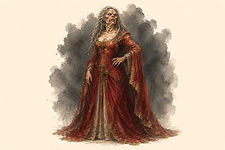
Mythopouch artistic interpretation
Details
Region
Arthurian
Regional Information Additional (if applicable)
British / Middle English Arthurian romance / Related French Fair Unknown and German traditions
Category
Person
Historicity (actuality or factual truth of persons, events, and claims)
Legendary
Gender
Male
Time Period
Legendary Arthurian age; Fair Unknown romances from the late 12th century; 15th-century Ragnelle poem and Malory
Symbol
Serpent
Tags
gyngolyn, arthurian, person, gawain, ragnelle, fair-unknown, guinglain, libeaus-desconus, serpent-kiss
Introduction - Overview
Gyngolyn is the son of Sir Gawain and Dame Ragnelle in The Wedding of Sir Gawain and Dame Ragnelle, a Middle English romance that briefly names him as a strong knight of the Round Table. His name also connects him with the Fair Unknown tradition, in which Gawain's son reaches Arthur's court without an acknowledged identity and earns recognition through adventure. The French Guinglain, the English Libeaus Desconus and Malory's Gingalin belong to related tellings, but their histories cannot simply be joined into one biography. Ragnelle is not his mother in every version: Renaut de Beaujeu's Le Bel Inconnu gives that role to the fairy Blanchemal. In the French adventure, the hero frees Blonde Esmeree from a serpent's shape through the Fearsome Kiss, while his love for the Maiden with the White Hands complicates the reward of marriage. Malory gives Gingalin a darker appearance among the knights killed during the exposure of Lancelot and Guinevere's relationship.
Gallery
Main Article - Who or What was...
Gyngolyn
In the Ragnelle romance, Gyngolyn appears near the end of a story centred on his parents. King Arthur faces a challenge from Gromer Somer Joure and must discover what women most desire. Ragnelle supplies the answer, sovereignty, in exchange for marriage to Gawain. On their wedding night Gawain lets her choose for herself, breaking the enchantment that has distorted her appearance. The poem names their son Gyngolyn as a good knight of the Round Table. It says Ragnelle lives with Gawain for five years; it does not narrate Gyngolyn's childhood or his own adventures.
The longer Fair Unknown romances begin elsewhere. In the Middle English Libeaus Desconus, also spelled Lybeaus Desconus, the youth is raised away from court by an unnamed mother. He takes armour from a dead knight and seeks knighthood from Arthur without being able to supply the identity expected of a noble warrior. A messenger brings a request to rescue her mistress, and the young knight wins the assignment despite doubts about his experience. Renaut's French version calls the messenger Helie and her mistress Blonde Esmeree. Its hero is Guinglain, son of Gawain and Blanchemal, rather than an explicitly identified son of Ragnelle.
The French rescue journey leads through armed opponents and enchantment. At the Golden Isle, Guinglain becomes involved with the Maiden with the White Hands before continuing towards Blonde Esmeree's imprisoned court. The queen has been transformed into a serpent by enchanters. Her kiss releases her from that shape, and a disembodied voice reveals the rescuer's name and parentage. The corresponding English episode concerns the Lady of Synadoun, who approaches in dragon-like form. The enchanted woman initiates the kiss: the scene should not automatically be retold as a deliberate decision by the knight to show mercy instead of striking.
Renaut continues beyond the rescue. Guinglain returns to the Maiden with the White Hands, who reveals that she was the voice that named him. He later leaves her for a tournament despite knowing that departure will cost him her love. Arthur encourages his marriage to Blonde Esmeree, bringing him a kingdom but not resolving his longing for the other woman. The Middle English romance does not reproduce this whole second sequence; some manuscripts instead emphasise recognition by his parents. The German Wigalois belongs to the wider family of related romances, not an interchangeable account of every event in Gyngolyn's life.
Malory names Gingalin among Gawain's sons and later includes Gingaline among the knights recruited by Agravain and Mordred at Carlisle. They attempt to catch Lancelot with Queen Guinevere. Lancelot goes to her without armour, although the text says he carries his sword; he kills Colgrevance, takes his armour and fights his way past the other attackers. Gingaline is among those killed, while Mordred escapes. This is a separate textual appearance, not a documented sequel to the Ragnelle marriage or the French serpent adventure. Keeping the versions distinct preserves both the promise and the darker possibilities attached to Gawain's son.
Summary
Gyngolyn is Gawain and Ragnelle's son in the Middle English wedding romance, linked with the Fair Unknown called Guinglain or Libeaus Desconus elsewhere. His adventures change between texts: the French hero has the fairy Blanchemal as his mother, rescues Blonde Esmeree and remains divided between love and marriage. English versions reshape the rescue and family recognition, while Malory's Gingalin dies among Lancelot's attackers. These are related traditions rather than a single continuous life. Their shared interest is the discovery of identity: how a young knight becomes known through family, courage and the stories told about him.
Now enter the Mythopouch World!
You’ve discovered:
Gyngolyn
From Myth to Game
Join to access FREE real-world mythology "Learn Quests" and "Courses". Sign up to the newsletter for new releases, game updates, insider news, and more as Mythopouch brings real mythology to life. EARN the right to purchase an offline board game by completing FREE modules.


It's FREE to join as a MEMBER!
Not ready to join? Get the newsletter instead below



Looking for others?
Click into the field below to search, or click the icon to go to full page search function!

Looking for Mythology Insights?


Click below to view our mythology blog article insights, where we delve into the current Mythopouch Tier regions, and what we think you should know!
Sources & Retellings
Explore the original mythological Source texts (most from over 75 years ago, some as translated, possibly with mature content) and Mythopouch's source Retellings (a modern retelling also suitable for 15+) connected to this mythological entity. We are growing this resource and will link these in the future; for now, check the References below, then find the Sources or Retellings on those pages!


References
Validation References:
- The Wedding of Sir Gawain and Dame Ragnelle, edited by Thomas Hahn, in Sir Gawain: Eleven Romances and Tales (1995), lines 799-820 - Gyngolyn, parentage and the five-year marriage.
- https://metseditions.org/read/49MyYpRH2ZvaUg6llivLljIbGqZaEGDY
- Lybeaus Desconus, Middle English Texts Series, Item 20 - Middle English narrative and explanatory notes.
- https://metseditions.org/read/V5GwLeBF9Wdgh5dNTl2eXIq5rrbjgG2
- Thomas Malory, Le Morte d'Arthur, Book XIX, chapter XI, and Book XX, chapters II-IV - Gawain's son Gingalin / Gingaline and the Carlisle ambush.
- https://www.gutenberg.org/files/1252/1252-h/1252-h.htm
- Introduction to Lybeaus Desconus, Middle English Texts Series - comparison with Renaut's Le Bel Inconnu, maternal identities, the serpent/dragon kiss, White Hands and the tournament.
- https://metseditions.org/read/3lw8aYyES44PxhybLUM919cX6lMRZ73M
Cultural Context Notice
Mythology developed across different cultures, periods and traditions, and there is rarely one universally accepted version of a story. Mythopouch approaches these traditions with respect while remaining faithful to the complexity of the surviving material. Retellings and educational content may interpret or adapt historical sources, but are not presented as definitive accounts of any culture, religion or belief system.