Arthurian
Gwyn ap Nudd
Name in Non-English, or Alternative Name/s
Gwynn ap Nudd, Gwyn son of Nudd, Gwyn mab Nudd
Also known as, and/or Titles and Roles
The King of the Tylwyth Teg, the Lord of Annwn, the Leader of the Wild Hunt, the White Son of Nudd, the Master of the Cŵn Annwn, the Lover of Creiddylad, the Black-Faced Huntsman

Mythopouch artistic interpretation
Details
Region
Arthurian
Regional Information Additional (if applicable)
British/Celtic
Category
Deity
Historicity (actuality or factual truth of persons, events, and claims)
Mythological
Gender
Male
Time Period
Prehistoric/mythic; literary tradition c. 11th-16th century CE
Symbol
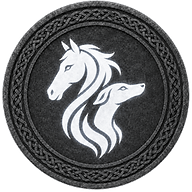
Horse & Hound
Tags
arthurian, gwyn-ap-nudd, welsh, celtic, spirit, annwn, tylwyth-teg, wild-hunt, culhwch-and-olwen, glastonbury-tor
Introduction - Overview
Gwyn ap Nudd is the king of the Tylwyth Teg, the fair folk of Welsh mythology, and the ruler of Annwn, the Welsh Otherworld that lies beyond the boundaries of mortal time and space. He is the black-faced huntsman who leads the Wild Hunt through the winter skies, riding a white horse with a golden saddle and commanding the Cŵn Annwn, the spectral hounds of the Otherworld whose white coats and red ears herald death to any who hear their baying. He is the warrior in whom God placed the spirit of the demons of Annwn, lest they destroy the world, a figure so powerful that King Arthur himself needed his aid to hunt the monstrous boar Twrch Trwyth. He is the abductor of Creiddylad, the maiden condemned to be fought over every May Day until Judgement Day, and the psychopomp who gathers the souls of fallen British warriors from the battlefield and guides them to the realm beyond. And he is the fairy king who was banished from Glastonbury Tor by Saint Collen with a flask of holy water, a lord of the Otherworld who has been called a demon, a deity, and the eternal guardian of the threshold between life and death.
Gallery
Main Article - Who or What was...
Gwyn ap Nudd
Gwyn ap Nudd first appears in the Black Book of Carmarthen, one of the four great works of medieval Welsh literature, compiled around 1250 but containing poetry from as early as the 9th century. In Poem XXXIV, he is addressed in a dialogue by Gwyddno Garanhir, a legendary king of the drowned kingdom of Cantre'r Gwaelod. Gwyn describes himself as a warrior of terrifying aspect: "Bull of battle, fierce, terrible, ruler of a host, unpleasant in wrath." He rides a white horse called Carngrwn, Round-hooved, with a golden saddle, and wears an engraved ring. His face is blackened, a mark of his otherworldly nature, and his finest hound is Dormarch, one of the Cŵn Annwn, the Hounds of the Otherworld. In the poem, Gwyn reveals his role as a psychopomp, a guide of souls, gathering the spirits of fallen British warriors from the field of slaughter and leading them to Annwn, the not-world that lies beyond mortal perception. He calls himself the lover of Creiddylad, the daughter of Lludd Llaw Ereint, binding his identity to the maiden whose abduction would become the central conflict of his legend.
The fullest account of Gwyn's deeds appears in Culhwch and Olwen, the oldest Arthurian tale, preserved in the White Book of Rhydderch and the Red Book of Hergest from the 14th century but composed centuries earlier. Culhwch ap Cilydd, a young prince cursed by his stepmother, must win the hand of Olwen, the daughter of the giant Ysbaddaden, by completing a series of impossible tasks. One of these tasks is to hunt Twrch Trwyth, a king who had been transformed into a monstrous boar by God, and to retrieve the comb and scissors from the beast's head. Arthur, the king of Britain, assembles a vast retinue of warriors to aid Culhwch, and among them is Gwyn ap Nudd, described as the man "in whom God put the spirit of the demons of Annwn, lest the world be destroyed." He is the only huntsman who can ride Du y Moroedd, the Black of the Seas, the legendary water horse capable of pursuing Twrch Trwyth into the ocean. Without Gwyn's aid, the hunt is impossible, and his presence marks him as both indispensable and dangerous, a force of the Otherworld bound to the service of the mortal king.
But Gwyn's role in Culhwch and Olwen is not limited to the hunt. He had abducted Creiddylad, the daughter of Lludd Llaw Ereint, from her betrothed, Gwythyr ap Greidawl, a warrior whose name means Victor Son of Scorcher. Gwythyr raised a great host against Gwyn, and the two fought a vicious battle. Gwyn was victorious, and in the aftermath he committed an act of such cruelty that it shocked even the warriors of Arthur's court. He murdered Nwython, one of Gwythyr's noblemen, and forced Nwython's son, Cyledr, to eat his father's heart. The torture drove Cyledr mad, and he earned the epithet Wyllt, the Wild. Arthur intervened, commanding Gwyn to release his captives and decreeing that Gwyn and Gwythyr must fight for Creiddylad every May Day, Calan Mai, until Judgement Day. The victor on that final day would claim the maiden. This perpetual combat, echoing older seasonal myths of winter and summer, binds Gwyn to an endless cycle of conflict, a lord of the Otherworld who can never rest.
In the same tale, Gwyn and Gwythyr advise Arthur in his quest to find Pennant Gofid, the Uplands of Hell, and to defeat the Hag of Pennant Gofid, a terrifying otherworldly witch. Their advice is cryptic and their assistance limited, suggesting that Gwyn serves Arthur only when it suits him, and that his loyalty is to Annwn rather than to Camelot. This ambiguity is central to Gwyn's character. He is not evil, but he is not benevolent either. He is other, a being whose morality and motives lie beyond human comprehension. The 14th-century Latin manuscript Speculum Christiani records Welsh soothsayers invoking him with the words: "To the king of Spirits, and to his queen -- Gwyn ap Nudd, you who are yonder in the forest, for love of your mate, permit us to enter your dwelling." This invocation shows that Gwyn was not merely a literary figure but a presence in the folk religion of medieval Wales, a spirit to be petitioned and propitiated.
The later medieval tradition transformed Gwyn from a warrior of Annwn into the king of the Tylwyth Teg, the fair folk or fairies of Wales. In the 16th-century hagiographic text Buchedd Collen, the Life of Saint Collen, the saint is invited to an audience with Gwyn ap Nudd at Glastonbury Tor in Somerset. Collen ascends the hill, falls asleep upon an egg-shaped stone, and awakens inside a magnificent castle where Gwyn sits upon a golden throne surrounded by beautiful maidens, soldiers, and minstrels. The king invites Collen to dine, but the saint refuses, knowing that to accept fairy food is to be trapped in the Otherworld forever. Instead, Collen draws a flask of holy water and casts it upon Gwyn and his court. The castle, the music, and the fairies vanish in an instant, and Collen finds himself alone on the tor. The tale reflects the Christian anxiety about the old pagan powers, but it also preserves the belief that Gwyn's kingdom lies just beneath the surface of the mortal world, accessible through certain hills and tors on certain days. The 14th-century Welsh poet Dafydd ap Gwilym refers to Gwyn in several poems, calling the owl the "fowl of Gwyn ap Nudd" and describing a lake as "the fish lake of Gwyn ap Nudd" and "the palace of the elves and their children." These references show that Gwyn had become a byword for the fairy realm itself, the sovereign of a world that runs parallel to our own, close enough to touch but dangerous to enter.
Summary
Gwyn ap Nudd endures as the most compelling lord of the Welsh Otherworld, the king whose blackened face and white hounds have haunted the British imagination for a thousand years. From the pages of the Black Book of Carmarthen to the summit of Glastonbury Tor, from the hunt for Twrch Trwyth to the eternal duel for Creiddylad, he is the bridge between the mortal world and Annwn, the guardian who keeps the demons in check and the guide who leads the dead to their rest. He is the reminder that the Otherworld is not heaven or hell but a realm with its own laws, its own king, and its own endless hunts through the winter dark.
Now enter the Mythopouch World!
You’ve discovered:
Gwyn ap Nudd
From Myth to Game
Join to access FREE real-world mythology "Learn Quests" and "Courses". Sign up to the newsletter for new releases, game updates, insider news, and more as Mythopouch brings real mythology to life. EARN the right to purchase an offline board game by completing FREE modules.


It's FREE to join as a MEMBER!
Not ready to join? Get the newsletter instead below


Looking for others?
Click into the field below to search, or click the icon to go to full page search function!

Looking for Mythology Insights?


Click below to view our mythology blog article insights, where we delve into the current Mythopouch Tier regions, and what we think you should know!
Sources & Retellings
Explore the original mythological Source texts (most from over 75 years ago, some as translated, possibly with mature content) and Mythopouch's source Retellings (a modern retelling also suitable for 15+) connected to this mythological entity. We are growing this resource and will link these in the future; for now, check the References below, then find the Sources or Retellings on those pages!


References
Validation References:
- Anonymous, "The Dialogue of Gwyn ap Nudd and Gwyddno Garanhir," Black Book of Carmarthen (Llyfr Du Caerfyrddin), c. 1250, Poem XXXIV - primary source; Gwyn's description of himself as bull of battle, his white horse Carngrwn, his hound Dormarch, his role as psychopomp, and his love for Creiddylad
- Anonymous, Culhwch and Olwen (Culhwch ac Olwen), preserved in the White Book of Rhydderch and the Red Book of Hergest, c. 11th-12th century composition - primary source; Gwyn's role in the hunt for Twrch Trwyth, the abduction of Creiddylad, the murder of Nwython, the madness of Cyledr, and Arthur's judgement of the perpetual combat
- Anonymous, Buchedd Collen (Life of Saint Collen), 16th century - primary source; the account of Gwyn ap Nudd as king of the Tylwyth Teg at Glastonbury Tor, his fairy castle, and his banishment by Collen's holy water
- Speculum Christiani, 14th-century Latin manuscript - primary source; the invocation of Gwyn ap Nudd by Welsh soothsayers as the king of spirits in the forest
- Dafydd ap Gwilym, Y Dylluan and Y Pwll Mawn, 14th century - primary source; the poet's references to Gwyn ap Nudd as the lord of owls and elvish lakes
- Bromwich, Rachel and Evans, D. Simon (eds), Culhwch and Olwen: An Edition and Study of the Oldest Arthurian Tale (University of Wales Press, 1988) - scholarly critical edition and analysis of Gwyn's role in the oldest Arthurian narrative
- Bromwich, Rachel (ed.), Trioedd Ynys Prydein: The Welsh Triads (University of Wales Press, 1978; revised 2006) - scholarly critical edition; the triadic tradition and Gwyn's place in Welsh heroic mythology
- Ford, Patrick K., The Mabinogion and Other Medieval Welsh Tales (University of California Press, 1977) - scholarly translation and analysis of the Mabinogion tales including Culhwch and Olwen and the Gwyn traditions
- Loomis, Roger Sherman, The Development of Arthurian Romance (Hutchinson, 1963) - scholarly analysis of the evolution of Arthurian figures from Welsh mythological roots to medieval romance
- Hutton, Ronald, The Pagan Religions of the Ancient British Isles (Blackwell, 1991) - scholarly study of the pre-Christian origins of figures like Gwyn ap Nudd and the transformation of pagan deities into fairy kings
Cultural Context Notice
Mythology developed across different cultures, periods and traditions, and there is rarely one universally accepted version of a story. Mythopouch approaches these traditions with respect while remaining faithful to the complexity of the surviving material. Retellings and educational content may interpret or adapt historical sources, but are not presented as definitive accounts of any culture, religion or belief system.