Greek Mythology List


Welcome to the Mythopouch list of Greek mythology entries! We also delve into the ancient history of Greece and the surrounding areas. From heroes to goddesses, places, monsters, artifacts, weapons, creatures and more - which will only grow over time. Mythopouch provides real-world information extracted from the original source material such as that from: Homer, Hesiod, Apollodorus, Ovid, Pausanias, Pindar, Aeschylus, Sophocles, Euripides, Hyginus, Diodorus Siculus and Apollonius of Rhodes. Words and stories carry powerful messages that were passed down from one generation to the next, many of which are still very applicable to modern times. Our unique imagery is meant to capture the imagination and ignite the magic mythology spark within us all. Our "token mark" coin symbol that is assigned to each record is a visual representation of the entity, for use in Mythopouch learning modules and games.
Learn - Earn - Play
Greek Entity Quick Index
Our current list of ancient Greek mythology and ancient history entities are here - which are growing day by day!
Search by using the:
-
"Search Mythology Records" function to browse all mythology records and blog pages;
-
Browse the visual cards with overviews by clicking "Go to Visual A-Z";
-
Or just browse and click the A-Z entries below....
See more list entries
Read Ancient Greek Insights
Click below to view our ancient Greek mythology blog article insights, where we delve into the current Mythopouch Tier regions and what we think you should know!


Greek Entity Card Index
See more card entries
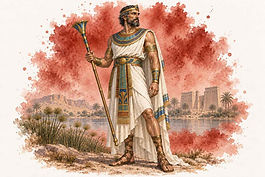
Aegyptus
Aegyptus is the legendary king whom Greek myth made the namesake of Egypt, the ruler of Arabia who was said to have conquered the Nile kingdom, and the father of fifty sons, forty-nine of whom were killed on their wedding night by their brides. He is the twin brother of Danaus, the king of Libya who fled across the sea with fifty daughters rather than see them married to his brother's sons. He is the ruler whose quarrel with his brother drew their children into a proposed mass marriage, a union that Danaus feared would conceal a struggle for power. He is the king whose sons were beheaded in a single night by forty-nine of the Danaids, the daughters of Danaus, leaving only Lynceus alive through the mercy of Hypermnestra. And he is an example of how Greek myth-tellers explained places through ancestral figures, connecting the Nile kingdom with the family stories of Argos. His place in that tradition does not establish him as a historical founder or prove that the country's name originated with a real king.
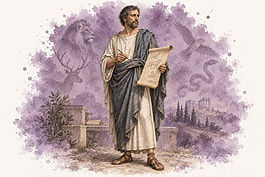
Aelian
Aelian is the Roman writer who wrote in Greek so beautifully that his readers called him honey-tongued, a compiler of wonders whose works preserve valuable fragments of lost Greek mythology. He is the author of De Natura Animalium, a seventeen-book catalogue of animals that is also one of the richest treasure-houses of mythological anecdote in all of classical literature, where elephants mourn their dead, dolphins rescue drowning sailors, and the manticore, the man-eating monster with a lion's body and a scorpion tail, inhabits the India of ancient travellers' tales. He is the collector of Varia Historia, a miscellany of fourteen books that gathers the stray facts, quotations, and stories that fell through the cracks of grander histories, including tales of Pythagoras, the philosopher who believed in the transmigration of souls, and Alexander the Great, the Macedonian conqueror who claimed descent from heroes. He is the man whom Philostratus describes as never having travelled beyond Italy, yet whose reading carried him into the reported wonders of distant lands. And he is the invisible bridge between the lost books of antiquity and the modern scholar, a writer whose habit of quotation preserves traces of works that would otherwise have vanished.

Aeneas
Aeneas is the Trojan hero who carried his aged father on his shoulders out of burning Troy and sailed across the known world to found a new civilisation in Italy, becoming the legendary father of the Roman people. He is the son of the goddess Aphrodite and the Trojan prince Anchises, a demigod whom the gods saved from death again and again because he was fated to survive the fall of Troy and father a race that would one day rule the world. He is the warrior who fought second only to Hector during the ten-year siege, rescued from the Greek champion Achilles by Poseidon himself when the sea god lifted him from the battlefield in a golden mist. He is the reluctant exile who wandered for seven years from the shores of Thrace to the harbours of Carthage and down into the underworld itself, driven by a destiny he could not escape. He is the founder of Lavinium and the ancestor of Romulus and Remus, the twins who would build Rome upon the hills beside the Tiber. And he is the hero of Virgil's Aeneid, the epic poem that made him the embodiment of Roman duty, endurance, and piety, a figure whose bloodline the family of Julius Caesar claimed as their own.

Aeolus, Keeper of the Winds
Aeolus, son of Hippotes, is the keeper of the winds whom Odysseus meets on the floating island of Aeolia during the wanderings described in Homer's Odyssey. He is a mortal ruler favoured by the gods, appointed by Zeus to raise or still every wind that crosses the sea. He is the lord of a bronze-walled island where six sons and six daughters feast together in an unbroken palace of music and rich food. He is the host who entertains Odysseus for a month and then gives him the gift that should have ended the hero's journey: a leather bag containing every adverse wind, sealed with a silver cord. He is the stern judge who refuses to help Odysseus a second time after the hero's crew releases the winds in greed and sends the fleet back to Aeolia. And he is the figure later poets and mythographers enlarged into the godlike king of the storm winds, the lord of the cave in the Aeneid and the namesake of the volcanic Aeolian Islands. This record concerns Aeolus son of Hippotes, not Aeolus son of Hellen, the ancestral king whose family tree produced Sisyphus, Athamas and Canace.
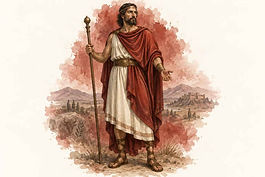
Aeolus, son of Hellen
Aeolus, son of Hellen, is the ancestral king who gave his name to the Aeolians, one of the major Greek tribal groups. He is the grandson of Deucalion, the flood survivor, and the son of Hellen, the eponym of all Hellenes or Greeks. He is the brother of Dorus, ancestor of the Dorians, and Xuthus, father of the Achaeans and Ionians. He is the ruler of Aeolia, later identified with Thessaly, and the founder from whom the great Aeolid families traced their origins. He is the husband of Enarete and the father of a vast household whose sons founded royal lines in Corinth, Iolcus, Elis, Boeotia, Phocis and Messenia. His daughters included Canace, Alcyone, Pisidice, Calyce and Perimede, each carrying a branch of the family into another myth. He is the Aeolus who matters to genealogy and tribal identity, not the Homeric keeper of the winds. The wind-keeper is Aeolus son of Hippotes; the figure in this record is the ancestor of the Aeolian Greeks.
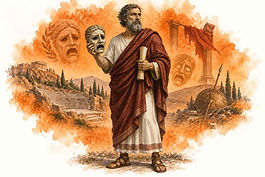
Aeschylus
Aeschylus is the earliest Greek tragedian whose plays survive and the poet whom ancient and modern criticism often calls the father of tragedy. He is the Athenian born at Eleusis around 525 BCE, son of Euphorion and member of an old Eupatrid family. He is the soldier who fought at Marathon in 490 BCE and probably at Salamis in 480, an experience that lies behind his historical tragedy The Persians. He is the theatrical innovator who, according to Aristotle, introduced the second actor, moved tragedy away from dependence upon the chorus and opened Greek drama to true dialogue and conflict. He is the master of the connected trilogy, the Oresteia being the only complete trilogy of Greek tragedy to survive. He is the composer of six securely attributed surviving tragedies: The Persians, Seven Against Thebes, The Suppliants, Agamemnon, The Libation Bearers and The Eumenides. He is the author traditionally attached to Prometheus Bound, whose attribution has long been questioned and cannot be accepted as certain. He is the poet of perhaps seventy to ninety plays, most now lost, whose known titles include the Achilles trilogy, the Theban trilogy, the Danaid trilogy, the Prometheus trilogy, the Lycurgeia and numerous works on Niobe, Palamedes, Philoctetes, Heracles and the women of Sicily. He is the dramatist who joined warfare, religion, spectacle and poetry into a theatre of divine power, inherited guilt, civic order and human suffering. And he is the veteran whose own epitaph, as reported by Pausanias, boasted only of Marathon and made no mention of the theatre he had created.

Aeson
Aeson is the rightful king of Iolcus who spent his reign in a dungeon while his half-brother sat upon his throne. He is the father of Jason, the hero who led the Argonauts in quest of the Golden Fleece, the magical ram's hide that hung in a distant grove in Colchis guarded by a never-sleeping dragon. He is the prisoner who smuggled his infant son out of the palace under the pretence of a stillbirth, trusting the wise centaur Chiron to raise the boy in secret on Mount Pelion. He is the aged man whose veins were drained of old blood and filled with a sorceress's brew, rising from a bronze cauldron with black hair and strong limbs after his son returned with Medea, the witch-daughter of King Aeetes. And he is the king whose restoration became the template for the murder of Pelias, for the same magic that gave Aeson back his youth was used to trick Pelias' daughters into butchering their own father.
Aethiopia
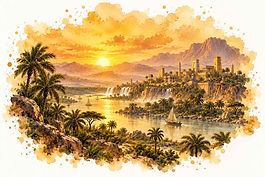
Aethiopia is the distant land of Greek legend where the gods themselves go to feast and where heroic kings rule beyond the familiar Greek world. It is the realm of Cepheus and Cassiopeia, whose daughter's life was threatened after the queen boasted of her beauty. Andromeda was exposed to a sea monster until Perseus came to her rescue. It is the kingdom associated with Memnon, the son of the dawn who brought Aethiopian warriors to the defence of Troy and fell in combat against Achilles. It is the place whose people Homer calls blameless, honoured by visits from Zeus and Poseidon at the edges of the poet's imagined world. And it is a name that also belonged to ancient geographical writing, where it could describe peoples and lands south of Egypt and elsewhere beyond familiar boundaries. This entry concerns that legendary landscape and its changing ancient meanings, not a single kingdom with the borders of the modern nation of Ethiopia. Its stories preserve the meeting of real geography, distant peoples and Greek imagination.

Aethlius
Aethlius is the first king of Elis, the prize-winning son of Zeus who led the Aeolians out of Thessaly and founded a kingdom that would one day host the greatest games in Greece. He is the husband of Calyce, the daughter of Aeolus, son of Hellen, by whom he fathered Endymion, the most beautiful man in the world, whom the moon goddess Selene loved so deeply that she begged Zeus to let him sleep forever rather than die. He is the king whose name, Aethlius, is built from the same Greek root as athlos, a contest fought for a prize, and whom later chroniclers made the first to set his sons racing. He is the forgotten founder behind the famous sleeper, the man who built the kingdom that his son would make immortal. And he is the link between the Flood that wiped out the old world and the Olympic tradition that celebrated the new, a bridge from Deucalion's ark to the running track at Olympia.
Aethra
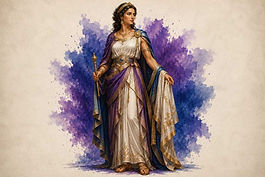
Aethra is the princess of Troezen whose single night with two men - one mortal, one divine - set in motion the legend of Athens' greatest hero. She is the daughter of King Pittheus, the wise ruler who understood the riddles of Delphi better than the kings who came to consult them, and the mother of Theseus, the boy who lifted a boulder to claim his father's sword and grew up to slay the Minotaur, the half-man half-bull monster, in the labyrinth of Crete. She is the woman who received a dream from Athena and waded into the moonlit sea to meet Poseidon, ensuring her son would carry both human and divine blood. She is the unwilling foster-mother of Helen of Troy, charged with guarding the kidnapped girl at Aphidna, and the slave dragged to Sparta and then to Troy when Helen's brothers came to reclaim their sister. And she is the grandmother who survived a decade of war only to be recognised by her grandsons in the ashes of Troy, a woman whose life spanned three generations of Greek legend from the birth of a hero to the fall of a city.

Aeëtes
Aeëtes is the king of Colchis, the sun-born ruler who received the Golden Fleece from the fugitive prince Phrixus and hung it in a sacred grove where a sleepless dragon stood guard, making it the most famous treasure in the Greek world. He is the son of Helios, the Titan god of the sun who drives his blazing chariot across the sky each day, and the Oceanid nymph Perseis, which makes him brother to the sorceress Circe and to Pasiphae, the queen of Crete whose cursed passion for a bull produced the Minotaur. He is the father of Medea, the witch-princess who betrayed him for love of the stranger Jason, and of Apsyrtus, the boy whose dismembered body was scattered across the waves to slow his father's pursuit. He is the tyrant who set three impossible tasks for any man who would claim the fleece: to yoke fire-breathing bulls with bronze hooves, to sow dragon's teeth that would sprout into armed warriors, and to overcome the sleepless serpent itself. And he is the king who lost everything - his treasure, his daughter, his son, and eventually his throne - because an oracle had warned him that strangers would one day come for the fleece, and he could not bring himself to believe that his own blood would be the instrument of his ruin.

Agamemnon
Agamemnon stands as one of the most consequential and tragic figures in Greek mythology. As king of Mycenae and commander-in-chief of the Greek forces during the Trojan War, he is both mighty warlord and doomed scion of a cursed house. His story weaves through the Iliad and Odyssey of Homer, dominates the Oresteia trilogy of Aeschylus, and reverberates through the tragedies of Sophocles and Euripides. Agamemnon embodies the destructive interplay of honour, power, and inherited guilt that defines the legendary House of Atreus.