
Details
Region
Greek
Regional Information Additional (if applicable)
Category
Person
Historicity (actuality or factual truth of persons, events, and claims)
Legendary
Gender
Male
Time Period
c. 13th century BCE (legendary); c. 3rd century BCE (literary crystallisation in Apollonius Rhodius)
Symbol
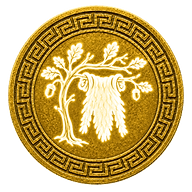
Fleece on Oak
Tags
greek, aeetes, colchis, goldenfleece, medea, jason, argonauts, helios, dragon
Introduction - Overview
Aeëtes is the king of Colchis, the sun-born ruler who received the Golden Fleece from the fugitive prince Phrixus and hung it in a sacred grove where a sleepless dragon stood guard, making it the most famous treasure in the Greek world. He is the son of Helios, the Titan god of the sun who drives his blazing chariot across the sky each day, and the Oceanid nymph Perseis, which makes him brother to the sorceress Circe and to Pasiphae, the queen of Crete whose cursed passion for a bull produced the Minotaur. He is the father of Medea, the witch-princess who betrayed him for love of the stranger Jason, and of Apsyrtus, the boy whose dismembered body was scattered across the waves to slow his father's pursuit. He is the tyrant who set three impossible tasks for any man who would claim the fleece: to yoke fire-breathing bulls with bronze hooves, to sow dragon's teeth that would sprout into armed warriors, and to overcome the sleepless serpent itself. And he is the king who lost everything - his treasure, his daughter, his son, and eventually his throne - because an oracle had warned him that strangers would one day come for the fleece, and he could not bring himself to believe that his own blood would be the instrument of his ruin.
Gallery
Main Article - Who or What was...
Aeëtes
Aeëtes was born from the union of Helios, the sun god whose blazing chariot lights the world each dawn, and Perseis, one of the three thousand daughters of Oceanus and Tethys, the primordial deities of the sea. His sisters were Circe, who would later rule the island of Aeaea and turn Odysseus's men into swine with her magic, and Pasiphae, who would become queen of Crete and mother the Minotaur, the half-man half-bull monster that lurked in the Labyrinth of Knossos. Some say his mother was Asterope instead of Perseis, but all agree that Aeëtes carried the fire of his father in his blood. He ruled Colchis, a rich kingdom at the eastern end of the Black Sea where the River Phasis runs down from the Caucasus Mountains, a land of gold and magic that the Greeks regarded as the edge of the known world.
The fleece came to him through the flight of Phrixus, the son of King Athamas of Orchomenus, who had been saved from sacrifice by a golden-fleeced ram sent by the gods. The ram carried Phrixus and his sister Helle across the sea, but Helle fell into the strait that still bears her name, the Hellespont. Phrixus rode on alone to Colchis, where Aeëtes received him with honour and gave him his daughter Chalciope for a wife. In gratitude, Phrixus sacrificed the ram to Zeus and gave its wondrous fleece to the king. Aeëtes hung the golden hide in a grove sacred to Ares, the god of war, where a monstrous serpent - born in some accounts from the blood of the Titan Typhon - coiled around the oak and never closed its eyes. An oracle had spoken: Aeëtes would hold his throne only so long as the fleece remained in the grove. The king, knowing this, grew cruel and suspicious. He sacrificed any foreigners who came to his shores, hoping that tales of his brutality would keep wanderers away.
Aeëtes had children by more than one wife. By Idyia, a daughter of Oceanus, he had Medea and Chalciope. By another woman, some say Eurylyte or the Nereid Neaera, he had Apsyrtus. Medea was trained in the arts of sorcery by her aunt Circe and served the goddess Hecate, the queen of ghosts and witchcraft who walks the earth by night with her pack of hounds. Chalciope married Phrixus and bore him sons, who would one day return to Colchis as strangers themselves. Apsyrtus was a young prince, his father's hope for the future. The family was powerful, proud, and bound by prophecy to a treasure they could never safely keep.
When the Argo, the fifty-oared ship built by Athena and manned by the greatest heroes of Greece, reached the mouth of the Phasis, Aeëtes knew at once that the oracle's warning had come to pass. Jason, the one-sandalled heir of Iolcos who had been sent by the usurper Pelias on a quest meant to destroy him, came to the palace with Phrixus's sons and asked for the fleece. Aeëtes received them at his table but his heart was full of rage and fear. He suspected a plot to steal his throne, and he was not wrong: the gods themselves, Hera and Athena, had arranged this voyage to punish Pelias and to settle old scores. When Jason asked for the fleece, Aeëtes did not refuse outright. Instead he set three tasks, each one a death sentence dressed as a trial.
First, Jason must yoke two bulls that grazed on the plain of Ares, creatures with hooves of bronze and breath of fire, and drive them through a field to plough it. Second, he must sow the field with the teeth of a dragon that had once guarded a spring, teeth that would sprout into armed warriors who would rise up to kill the sower. Third, he must overcome the sleepless dragon that guarded the fleece itself. Aeëtes boasted that he performed these labours himself each day, yoking the bulls in the morning and cutting down the earthborn warriors by evening, though this was more threat than truth. He swore that if Jason succeeded, the fleece would be his, but privately he planned to burn the Argo and kill every man aboard.
What Aeëtes did not foresee was the treachery of his own daughter. The goddess Hera had persuaded Aphrodite to send her son Eros, the winged archer of love, to shoot Medea with an arrow of gold, and the princess fell helplessly in love with Jason. She gave him a magical ointment distilled from the blood of Prometheus, the Titan chained in the Caucasus for stealing fire from the gods, which made his body impervious to flame for a single day. With it he yoked the bulls and ploughed the field. When the earthborn warriors sprang from the dragon's teeth, Medea had already told him to throw a stone into their midst, and in the confusion they turned on each other and were destroyed. Finally, in the dark of night, Medea led Jason to the grove of Ares, where she sang the serpent to sleep with charms and herbs, and Jason lifted the Golden Fleece from the oak.
Aeëtes discovered the theft at dawn and flew into a fury that shook the palace. He called out his fleet and set off in pursuit of the Argo, determined to burn the ship and hang Jason's corpse from the mast. Medea, knowing her father's speed and cruelty, took her brother Apsyrtus - some say she lured him into a trap, others that she killed him on the ship itself - and cut his body into pieces. She threw the limbs and torso overboard one by one, and Aeëtes, compelled by grief and the need to give his son a proper burial, stopped at each splash to gather the pieces from the water. By the time he had collected what he could, the Argo had vanished into the mist. The Greeks call this the murder of Apsyrtus, and it was the first of the crimes that would stain Medea's name forever.
When Aeëtes returned to Colchis, he found that his brother Perses had seized the throne in his absence, for the oracle had spoken true: the loss of the fleece meant the loss of the kingdom. Aeëtes was deposed and driven into exile or imprisonment, his cruelty and suspicion having won him no friends among his own people. Years later, Medea herself returned to Colchis after being cast out by Jason and by Athens, and found her father in chains or in hiding. She killed Perses with poison or witchcraft and restored Aeëtes to his throne, a final act of daughterly devotion that could never undo what had been done. What became of Aeëtes after this restoration, the old stories do not say. He may have died in his bed, or he may have passed into legend as one more king whose doom was written in gold and guarded by a serpent that could not sleep.
Summary
Aeëtes stands as the tragic guardian of the impossible prize, the sun-born king whose cruelty was born of prophecy and whose ruin came through the love of his own child. From the golden grove of Ares to the bloody wake of the Argo, from the fire-breathing bulls of the plain to the dismembered body of Apsyrtus, his story is one of power that could not protect what mattered most. Every tyrant who trusts no one, every father betrayed by his own blood, and every treasure that draws destruction to its keeper carries some shadow of Aeëtes, the king of Colchis who learned too late that the serpent at the gate was never the true danger.
Now enter the Mythopouch World!
You’ve discovered:
Aeëtes
From Myth to Game
Join to access FREE real-world mythology "Learn Quests" and "Courses". Sign up to the newsletter for new releases, game updates, insider news, and more as Mythopouch brings real mythology to life. EARN the right to purchase an offline board game by completing FREE modules.


It's FREE to join as a MEMBER!
Not ready to join? Get the newsletter instead below


Looking for others?
Click into the field below to search, or click the icon to go to full page search function!

Looking for Mythology Insights?


Click below to view our mythology blog article insights, where we delve into the current Mythopouch Tier regions, and what we think you should know!
Sources & Retellings
Explore the original mythological Source texts (most from over 75 years ago, some as translated, possibly with mature content) and Mythopouch's source Retellings (a modern retelling also suitable for 15+) connected to this mythological entity. We are growing this resource and will link these in the future; for now, check the References below, then find the Sources or Retellings on those pages!


References
Validation References:
- Apollonius Rhodius, Argonautica, Books 3-4 (c. 3rd century BCE) - Aeëtes's tasks, Medea's betrayal, and pursuit of the Argo
- Pindar, Pythian Ode 4.230-270 (462 BCE) - earliest account of Aeëtes and the fleece
- Apollodorus, Bibliotheca 1.9.23-28 (c. 1st-2nd century CE) - genealogy, tasks, and aftermath
- Euripides, Medea, lines 1-45, 1330-end (431 BCE) - Medea's later return to Colchis and restoration of Aeëtes
- Diodorus Siculus, Library of History 4.45-49 (c. 1st century BCE) - Colchian traditions and Aeëtes's rule
- Hyginus, Fabulae 22-23 (c. 1st-2nd century CE) - the tasks and the murder of Apsyrtus
- Hesiod, Theogony, lines 956-962 (c. 8th-7th century BCE) - parentage of Aeëtes, Circe, and Pasiphae
- Gantz, Timothy. Early Greek Myth: A Guide to Literary and Artistic Sources (1993) - Johns Hopkins University Press, chapters on the Argonauts and Aeëtes
- Hunter, Richard. The Argonautica of Apollonius: Literary Studies (1993) - Cambridge University Press, scholarly analysis of Aeëtes's characterisation
- Braund, David. Georgia in Antiquity: A History of Colchis and Transcaucasian Iberia (1994) - Oxford University Press, historical context of Colchis
- Clauss, James J. The Best of the Argonauts: The Redefinition of the Epic Hero in Book 1 of Apollonius's Argonautica (2000) - University of California Press, scholarly study
Cultural Context Notice
Mythology developed across different cultures, periods and traditions, and there is rarely one universally accepted version of a story. Mythopouch approaches these traditions with respect while remaining faithful to the complexity of the surviving material. Retellings and educational content may interpret or adapt historical sources, but are not presented as definitive accounts of any culture, religion or belief system.