
Details
Region
Greek
Regional Information Additional (if applicable)
Category
Artifact/Object/Weapon
Historicity (actuality or factual truth of persons, events, and claims)
Mythological
Gender
N/A
Time Period
Classical Greek mythology (c. 5th-4th century BCE)
Symbol
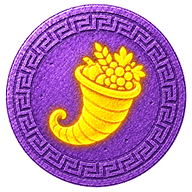
Cornucopia
Tags
greek, artifact, abundance, harvest
Introduction - Overview
The Cornucopia is the horn of plenty, a magical horn that fills itself with whatever food or drink its owner desires, a gift from the infant king of the gods. It is the broken horn of the goat Amalthea, the nurse who fed baby Zeus with her milk in a secret cave on Crete. It is the prize torn from the river god Achelous by the hero Heracles during a wrestling match for the hand of a princess. It is the attribute held by gods of abundance across the Greek and Roman world, from Demeter the grain goddess to Plutus the god of wealth to Fortuna the goddess of luck. And it is the symbol that still adorns Thanksgiving tables, state seals, and the halls of the United States Capitol, a horn that has been overflowing for three thousand years.
Gallery
Main Article - Who or What was...
Cornucopia
The story begins on the island of Crete, in a dark cave on Mount Dicte, where the infant Zeus was hidden from his father Cronus, the Titan who had devoured his own children to prevent a prophecy that one of them would overthrow him. Rhea, Zeus's mother, had tricked Cronus by giving him a stone wrapped in swaddling clothes instead of the baby, and she spirited Zeus away to Crete. There, the baby was nursed by a goat named Amalthea, whose milk gave the future king of the gods the strength to grow. The goat was attended by nymphs, and one of them may have shared the name Amalthea. When the young Zeus played with his nurse, his divine strength was too much for her. He accidentally broke off one of her horns. The nymphs gathered the horn, filled it with fresh herbs and fruit, and presented it to the infant god. Zeus, in turn, endowed the horn with a power that would make it famous: whoever possessed it could wish for any food or drink, and the horn would instantly overflow with it.
In another telling, the Cornucopia came into being through brute force rather than accident. The hero Heracles, the son of Zeus who was forced to complete twelve impossible labors, sought to marry Deianira, a princess of Calydon. But he had a rival: Achelous, the mighty river god who could shift his form at will. The two met in a wrestling match to decide who would win the princess. Achelous transformed himself into a bull, his horns gleaming, but Heracles was stronger. He seized one of the bull's horns and tore it from Achelous's head. The river god, bleeding and defeated, later traded the horn back from Heracles in exchange for another horn, the horn of Amalthea, which Heracles had acquired. Some say the Acheloides, the naiad daughters of Achelous, took the broken horn and consecrated it, transforming it into the Horn of Plenty that would never empty.
Once created, the Cornucopia became one of the most recognizable symbols in the ancient world. It passed into the hands of the gods and goddesses of abundance. Demeter, the goddess of grain and harvest, was often shown holding it, the horn spilling over with wheat and grapes. Her son Plutus, the child god of riches and agricultural bounty, carried it as his defining attribute. Gaia, the primordial Earth herself, held the overflowing horn as a sign of her endless fertility. Even Hades, the grim ruler of the underworld, was depicted with a Cornucopia in mystery cults, for he was also a giver of mineral wealth and the hidden riches of the earth. Tyche, the goddess of fortune, carried it in her statues at Elis and Aigeira, a star-spangled boy-god named Sosipolis held it in a dream-vision at Olympia, and the Roman goddess Fortuna made it the emblem of luck and prosperity.
The Cornucopia's power was not merely symbolic. In the stories, it was a genuine magical object. The horn of Amalthea could provide bounteous amounts of food or drink, whatever the possessor wished for. When Zeus reached maturity and overthrew his father, he did not forget his nurse. He placed Amalthea among the stars as the constellation Capra, the goat-star that surrounds Capella. Her hide he fashioned into the Aegis, his thunder-shield, and her horn he kept as a token of the abundance that had sustained him in his hidden infancy. The horn bore her name forever: the Horn of Amalthea.
The image of the overflowing horn outlived the gods who carried it. Roman artists carved it into statues of Abundantia, the personification of abundance, and Annona, the goddess of Rome's grain supply. It appeared on coins of Ptolemy IV of Egypt and on the state seals of Idaho and North Carolina. In the 16th century, the Latin name cornucopia, meaning "horn of plenty," entered common usage. Today, wicker horns filled with autumn fruits and vegetables sit at the center of Thanksgiving tables across North America, a direct descendant of the goat's horn that fed a hidden god in a Cretan cave three millennia ago.
Summary
The Cornucopia stands as the eternal symbol of abundance, a broken horn that became a vessel of endless plenty. From the milk of a goat on Crete to the wrestling ring of a river god, from the hands of grain goddesses to the tables of modern harvest festivals, it has carried the same promise across every age: that the earth will provide, that fortune will overflow, that no wish for nourishment need go unanswered. Every Thanksgiving horn, every state seal, every ancient coin bearing its image is a reminder that abundance itself was once a gift from a goat to a baby who would become king of the gods.
Now enter the Mythopouch World!
You’ve discovered:
Cornucopia
From Myth to Game
Join to access FREE real-world mythology "Learn Quests" and "Courses". Sign up to the newsletter for new releases, game updates, insider news, and more as Mythopouch brings real mythology to life. EARN the right to purchase an offline board game by completing FREE modules.


It's FREE to join as a MEMBER!
Not ready to join? Get the newsletter instead below


Looking for others?
Click into the field below to search, or click the icon to go to full page search function!

Looking for Mythology Insights?


Click below to view our mythology blog article insights, where we delve into the current Mythopouch Tier regions, and what we think you should know!
Sources & Retellings
Explore the original mythological Source texts (most from over 75 years ago, some as translated, possibly with mature content) and Mythopouch's source Retellings (a modern retelling also suitable for 15+) connected to this mythological entity. We are growing this resource and will link these in the future; for now, check the References below, then find the Sources or Retellings on those pages!


References
Validation References:
- Pseudo-Apollodorus, Bibliotheca 1.1.6, 2.148 (2nd century CE) - birth and hiding of Zeus; Heracles and Achelous
- Ovid, Fasti 5.111-128 (1st century BCE-1st century CE) - Amalthea's horn broken on a tree, given to Zeus
- Pausanias, Description of Greece 6.25.4, 7.26.8 (2nd century CE) - Tyche and Sosipolis holding the horn of Amalthea at Elis and Aigeira
- Diodorus Siculus, Library of History 4.35.3 (1st century BCE) - Heracles wrestling Achelous, the horn given to the Aetolians
- Kerenyi, Karl, The Gods of the Greeks (1951) - Chapter 3, "The Childhood of Zeus"
- Burkert, Walter, Greek Religion (1985) - Chapter 3, "The Gods of Olympus," pp. 125-128
- Nilsson, Martin P., The Mycenaean Origin of Greek Mythology (1932) - Chapter 5, "The Cretan Myths"
- West, M.L., Hesiod: Theogony (1966) - Commentary on lines 453-506, Cronus and the birth of Zeus
Cultural Context Notice
Mythology developed across different cultures, periods and traditions, and there is rarely one universally accepted version of a story. Mythopouch approaches these traditions with respect while remaining faithful to the complexity of the surviving material. Retellings and educational content may interpret or adapt historical sources, but are not presented as definitive accounts of any culture, religion or belief system.