
Details
Region
Greek
Regional Information Additional (if applicable)
Category
Titan
Historicity (actuality or factual truth of persons, events, and claims)
Mythological
Gender
Female
Time Period
c. 8th-7th century BCE (Hesiodic tradition)
Symbol
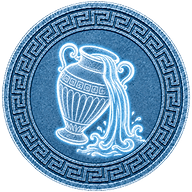
Overflowing Urn
Tags
greek, titan, tethys, oceanus, rivers, oceanids, hera, styx
Introduction - Overview
Tethys is the Titaness of the sources of fresh water, the wife of Oceanus and the mother of the three thousand rivers and the countless Oceanid nymphs who personify every spring, well, and fountain in the Greek world. She is the daughter of Ouranos, the primordial Sky, and Gaia, the primordial Earth, born in the first generation of divine beings before Zeus and the Olympian gods ever claimed Olympus. She is the great nurse who raised Hera, the queen of the gods, in secret during the war between the Titans and the Olympians, hiding the infant goddess from her father Kronos, the Titan king who swallowed his own children to prevent a prophecy that one of them would overthrow him. She is the mother whose children include the Nile, the Alpheus, the Scamander, and every other river that ever watered the earth, each one a god in his own right with power over the lands he flowed through. She is the grandmother of Achilles through her daughter Styx, the river of the underworld whose waters bound the most solemn oaths of the gods. And she is the namesake of the Tethys Sea, the vast prehistoric ocean that existed before the continents drifted apart, a legacy that has outlasted every temple and every hymn, proving that the ancient Greeks named their primordial deities with an intuition that modern science would only confirm millennia later.
Gallery
Main Article - Who or What was...
Tethys
Tethys was born in the earliest days of the cosmos, when the world was still young and the gods were few. Her father was Ouranos, the Sky, who had emerged from Chaos alongside Gaia, the Earth, and who had then lain with Gaia to produce the first generation of divine children. These children were the Titans, twelve in number, six male and six female, and Tethys was one of the six daughters. Her brothers were Oceanus, Kronos, Hyperion, Crius, Coeus, and Iapetus, and her sisters were Rhea, Theia, Themis, Mnemosyne, and Phoebe. Together they formed the first divine dynasty, ruling the cosmos before the Olympian gods were ever born. But the reign of the Titans was violent from the start. Ouranos hated his children and imprisoned them in the belly of Gaia, and it was only when Kronos, the youngest and most cunning of the brothers, castrated Ouranos with a sickle of adamantine that the Titans were freed. Kronos then became king, and the world entered the age of the Titans.
Tethys did not seek power. While her brothers and sisters engaged in the politics of the cosmos, she turned to the waters. She married her brother Oceanus, the Titan who personified the great river that encircled the entire world, the boundary between the known and the unknown, the fresh water that sustained all life. Their union was one of the most fruitful in all Greek mythology. Together they produced the three thousand Potamoi, the river-gods, each one the divine spirit of a particular river on earth. The most famous of these were the Nile, whose annual flood made Egypt the breadbasket of the ancient world; the Alpheus, whose waters flowed through Olympia and were sacred to Zeus; the Scamander, whose banks were the battlefield of Troy; and the Styx, whose dark waters flowed through the underworld and whose name became synonymous with the most binding oaths in the divine world, for the gods themselves swore by the Styx and could not break such an oath without suffering terrible consequences. Tethys also bore the Oceanids, the three thousand nymphs of the springs and fountains, including Metis, the personification of cunning intelligence who would become the first wife of Zeus and the mother of Athena, and Eurynome, who with Oceanus raised the infant Hephaestus after Hera cast him from Olympus for his deformity.
When the war between the Titans and the Olympians broke out, the Titanomachy, Tethys and Oceanus refused to take sides. Oceanus, whose waters surrounded the world, withdrew from the conflict, and Tethys joined him in neutrality. But her neutrality did not mean indifference. When Rhea, her sister, gave birth to Hera and feared that Kronos would swallow the infant as he had swallowed all his other children, she entrusted the baby to Tethys. The Titaness took Hera to the island of Crete, or to some said the land of the Hyperboreans beyond the north wind, and raised the girl in secret, nursing her with her own milk and protecting her from her father's appetite. When the war ended and Zeus, the youngest son of Kronos, emerged victorious, Hera was restored to her family and eventually became the queen of the gods. But she never forgot the Titaness who had saved her life, and the bond between them remained strong. In later myth, when the goddess Callisto, one of Artemis's hunting companions, was transformed into a bear by Hera's jealousy and placed in the sky as the constellation Ursa Major, Hera asked Tethys to ensure that the constellation never dipped below the horizon into the sea. Tethys agreed, and to this day the stars of the Great Bear circle the pole without ever touching the ocean, a celestial arrangement maintained by the ancient nurse of the queen of the gods.
Tethys appears rarely in the great heroic myths, but her presence is felt everywhere there is water. In the Iliad, the poet Homer calls upon the rivers of the world to witness the great deeds of the heroes, and every one of those rivers is her son. In the Odyssey, when Odysseus is shipwrecked and desperate for fresh water, the springs he finds are tended by her daughters. The Greeks believed that all fresh water came ultimately from the sources that Tethys guarded, the underground springs that fed the rivers and the wells that sustained the cities. She was not worshipped with the same public festivals as Athena or Apollo, but her presence was acknowledged in every libation poured to the nymphs of the springs, in every prayer offered at a sacred well, and in every sailor who called upon the rivers for safe passage.
In art, Tethys was sometimes depicted as a matronly figure with wings, representing the water-birds that flew over her springs, or holding an overflowing urn from which rivers flowed. She was often shown beside Oceanus, the two of them forming a pair that represented the totality of the world's waters, salt and fresh, boundless and bounded. The Romans identified her with no particular goddess of their own, for her function was too primordial, too bound up with the specific geography of the Greek world, to be easily translated. But her name survived in the scientific vocabulary of the modern world, when geologists named the vast prehistoric ocean that existed between the continents of Laurasia and Gondwana the Tethys Sea, recognising in the ancient Titaness the perfect symbol for the primordial waters that had once covered the earth.
Summary
Tethys endures as the primordial source of all fresh water in the Greek cosmos, the Titaness whose marriage to Oceanus produced the rivers and springs that made civilisation possible. From the nursing of Hera in secret to the celestial ban on Ursa Major's descent, from the three thousand river-gods to the modern Tethys Sea that bears her name, her story is one of quiet, sustaining power rather than dramatic conflict. Every river that waters a field, every spring that rises from the earth, and every oath sworn by the dark waters of the Styx carries some echo of Tethys, the great nurse who raised a queen and whose children still flow through the world she made possible.
Now enter the Mythopouch World!
You’ve discovered:
Tethys
From Myth to Game
Join to access FREE real-world mythology "Learn Quests" and "Courses". Sign up to the newsletter for new releases, game updates, insider news, and more as Mythopouch brings real mythology to life. EARN the right to purchase an offline board game by completing FREE modules.


It's FREE to join as a MEMBER!
Not ready to join? Get the newsletter instead below


Looking for others?
Click into the field below to search, or click the icon to go to full page search function!

Looking for Mythology Insights?


Click below to view our mythology blog article insights, where we delve into the current Mythopouch Tier regions, and what we think you should know!
Sources & Retellings
Explore the original mythological Source texts (most from over 75 years ago, some as translated, possibly with mature content) and Mythopouch's source Retellings (a modern retelling also suitable for 15+) connected to this mythological entity. We are growing this resource and will link these in the future; for now, check the References below, then find the Sources or Retellings on those pages!


References
Validation References:
- Hesiod, Theogony (c. 700 BCE) - lines 133-136, 337-370, the birth of Tethys, her marriage to Oceanus, and the birth of the rivers and Oceanids
- Homer, Iliad (c. 750 BCE) - Book 14, lines 200-204, 271-279, Hera's visit to Oceanus and Tethys and their role in her upbringing
- Homer, Odyssey (c. 8th century BCE) - Book 10, lines 508-515, reference to the sources of fresh water and the nymphs
- Apollodorus, Bibliotheca 1.1.3, 1.2.1-2 (c. 100 BCE) - the genealogy of Tethys and her children
- Hyginus, Fabulae, Preface - the parentage of Tethys and her role in the Titanomachy
- Callimachus, Hymn 3 to Artemis (3rd century BCE) - lines 245-248, Tethys's role in preventing Ursa Major from touching the sea
- Pausanias, Description of Greece 8.38.3 (2nd century CE) - the spring of Styx and its connection to the oaths of the gods
- West, M.L., Hesiod: Theogony (Oxford University Press, 1966) - commentary on lines 337-370, the Oceanus-Tethys line and its cosmological significance
- Clay, Jenny Strauss, Hesiod's Cosmos (Cambridge University Press, 2003) - Chapter 2 on the primordial deities and the structure of the Hesiodic cosmos
- Burkert, Walter, Greek Religion (Harvard University Press, 1985) - Chapter III on the cult of water nymphs and the role of Tethys in Greek religious practice
Cultural Context Notice
Mythology developed across different cultures, periods and traditions, and there is rarely one universally accepted version of a story. Mythopouch approaches these traditions with respect while remaining faithful to the complexity of the surviving material. Retellings and educational content may interpret or adapt historical sources, but are not presented as definitive accounts of any culture, religion or belief system.