Greek
Nemean Lion's Pelt
Name in Non-English, or Alternative Name/s
Νεμέου λέοντος δορά (Nemeou Leontos Dora)
Also known as, and/or Titles and Roles
The Lion Skin, The Hide of Heracles, The Invulnerable Cloak, The Nemean Armour, The Lion's Mane, The Pelt of the First Labor

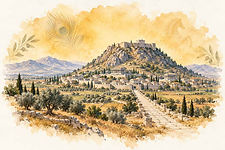
Mythopouch artistic interpretation
Details
Region
Greek
Regional Information Additional (if applicable)

Category
Artifact/Object/Weapon
Historicity (actuality or factual truth of persons, events, and claims)
Mythological
Gender
N/A
Time Period
13th-12th century BCE (mythic age of Heracles)
Symbol
Lion's Hide Cloak
Tags
greek, heracles, nemean-lion, pelt, first-labor, eurystheus, invulnerable-hide, tiryns, monster
Introduction - Overview
The Nemean Lion's Pelt is the impenetrable hide of the monstrous lion slain by Heracles, the hero forced to complete twelve impossible labors, and the armour he wore for every labor that followed. It is the skin that no weapon could pierce, not the bronze arrowheads of mortal smiths nor the club of Heracles himself, a beast so terrible that it had reduced the land of Nemea to ashes and made the people hide behind triple-locked gates. It is the trophy that Heracles won by strangling the lion with his bare hands, the first proof that his strength was greater than any monster born of the earth. It is the cloak he fashioned by skinning the beast with its own claws, the only edge sharp enough to cut what no mortal blade could touch. And it is the symbol that became inseparable from the hero's image, the lion's head worn as a helmet and the golden fur draped across his shoulders, so that every statue, every coin, and every story of Heracles shows him in the pelt of the beast he conquered on the first day of his servitude.
Gallery
Main Article - Who or What was...
Nemean Lion's Pelt
The Nemean Lion was born from monstrous stock. Some say its parents were Typhon, the vast serpentine giant with a hundred dragon heads whom Zeus had struck down with his thunderbolt, and Echidna, the half-woman half-serpent who mothered nearly every monster in Greek myth. Others say it sprang from the moon goddess Selene and fell to earth in a shower of fire. Whatever its origin, the lion grew to a size no mortal beast had ever reached, with claws like scythes and a hide so thick and hard that no weapon forged by human hands could pierce it. It settled in a cave with two mouths on the slopes of Mount Tretus near the city of Nemea in the Argolid, the region of the Peloponnese that was home to the great Bronze Age palace-culture. There it preyed upon the cattle and the people, and the men of Nemea grew so terrified that they dared not leave their walls.
Heracles came to Nemea in the service of Eurystheus, the king of Tiryns and Mycenae who had been assigned the task of commanding the hero by the oracle of Apollo at Delphi. Heracles had been driven mad by Hera, the queen of Olympus and wife of Zeus, who hated him because he was the son of her husband and the mortal woman Alcmene. In his madness Heracles had killed his own wife Megara and their children, and when he recovered his senses he went to Delphi to ask how he could atone. The Pythia, the priestess who spoke Apollo's prophecies in riddles, told him that he must serve Eurystheus for twelve years and perform whatever labors the king demanded. The first of these labors was to bring back the skin of the Nemean Lion.
Heracles travelled to Nemea and found the lion's cave. He shot arrows at it, but the shafts bounced off the hide like twigs against stone. He struck it with his great olive-wood club, but the blows only angered the beast without wounding it. The lion charged, and Heracles, seeing that no weapon would avail him, dropped his club and grappled with the monster bare-handed. The fight was terrible, for the lion's claws could tear bronze and its jaws could crush a bull's skull. But Heracles was stronger. He wrapped his arms around the lion's neck and squeezed, his muscles straining until the beast's eyes bulged and its tongue lolled and at last its body went limp. He had killed the unkillable with nothing but his own hands.
But the pelt remained. Heracles tried to skin the lion with his knife, but the blade bent and broke against the hide. He tried with a sharpened stone, and the stone shattered. Then he had an idea. He took one of the lion's own claws, the curved talons that had torn through bronze and bone, and used them to cut the hide from the carcass. The claw sliced through where no other edge could, and Heracles peeled the golden skin away in one piece. He cut slits for his arms and draped the pelt over his shoulders like a cloak, pulling the lion's head up over his own so that the empty eyes stared out above his brow and the fanged jaws framed his face. From that day forward he wore the Nemean Lion's Pelt in every battle, every labor, and every trial, and no enemy who saw him coming in that terrible disguise ever faced him without fear.
The pelt appears again in the story of Heracles' second labor, the Lernaean Hydra, the many-headed serpent that lived in the marshes of Lerna near Argos. Heracles wore the lion skin as armour when he confronted the Hydra, and when the serpent's venomous fangs struck at him, they could not pierce the hide that had already turned aside every weapon in Greece. His nephew Iolaus, who had come to aid him, burned the stumps of the Hydra's severed heads to keep them from growing back, and together they destroyed the beast. But the Hydra's blood was poison, and Heracles dipped his arrows in it, so that from that day forward even his shafts carried death. The pelt had saved him once, and it would save him again through every labor that followed, from the Erymanthian Boar to the Cretan Bull to the apples of the Hesperides.
In later ages, the pelt became the single most recognisable attribute of Heracles. Greek sculptors from the archaic period onward showed him with the lion's head as a helmet and the fur draped across his back, and the image was so fixed that a Heracles without his pelt was almost unthinkable. Roman emperors struck coins showing the hero in the lion skin to symbolise their own strength and invincibility. The pelt passed into the medieval imagination as the armour of the Christian strongman, and Renaissance painters placed it on the shoulders of every Hercules they depicted. In the modern world, the lion skin remains the symbol of conquest over the unconquerable, the proof that what cannot be pierced can still be overcome by strength and cunning.
Summary
The Nemean Lion's Pelt stands as the first trophy of Heracles, the impenetrable hide of the beast he strangled with his bare hands and skinned with its own claws. From the cave on Mount Tretus to the marshes of Lerna, from the sculptures of archaic Greece to the coins of Roman emperors, it is the symbol of invincibility won through strength and ingenuity. Every image of a hero wearing the skin of a conquered beast, and every story of a man who turns his enemy's greatest weapon against him, descends from the golden pelt that Heracles draped across his shoulders on the first day of his labors.
Now enter the Mythopouch World!
You’ve discovered:
Nemean Lion's Pelt
From Myth to Game
Join to access FREE real-world mythology "Learn Quests" and "Courses". Sign up to the newsletter for new releases, game updates, insider news, and more as Mythopouch brings real mythology to life. EARN the right to purchase an offline board game by completing FREE modules.


It's FREE to join as a MEMBER!
Not ready to join? Get the newsletter instead below



Looking for others?
Click into the field below to search, or click the icon to go to full page search function!

Looking for Mythology Insights?


Click below to view our mythology blog article insights, where we delve into the current Mythopouch Tier regions, and what we think you should know!
Sources & Retellings
Explore the original mythological Source texts (most from over 75 years ago, some as translated, possibly with mature content) and Mythopouch's source Retellings (a modern retelling also suitable for 15+) connected to this mythological entity. We are growing this resource and will link these in the future; for now, check the References below, then find the Sources or Retellings on those pages!


References
Validation References:
- Hesiod, Theogony (c. 700 BCE) - lines 326-332 (the Nemean Lion born of Echidna and Typhon)
- Homer, Iliad (c. 8th century BCE) - Book 5.638-651 (Heracles and the lion in Nestor's recollection)
- Apollodorus, Bibliotheca (1st-2nd century CE) - Book 2.5.1 (the first labor: the Nemean Lion)
- Diodorus Siculus, Bibliotheca Historica (1st century BCE) - Book 4.11.3-4 (Heracles strangles the lion and skins it with its own claw)
- Pindar, Nemean Ode 1.49-53 (462 BCE) - Heracles and the Nemean Lion
- Theocritus, Idyll 25 (3rd century BCE) - the fight between Heracles and the Nemean Lion
- Pausanias, Description of Greece (2nd century CE) - Book 2.15.2 (the cave of the lion at Nemea)
- Euripides, Heracles (c. 416 BCE) - lines 359-363 (Heracles' madness and the labors)
- Boardman, John, Athenian Black Figure Vases (Thames and Hudson, 1974) - pp. 224-227 (Heracles and the Nemean Lion in vase painting)
- Gantz, Timothy, Early Greek Myth: A Guide to Literary and Artistic Sources (Johns Hopkins University Press, 1993) - Volume 2, pp. 378-383 (the Nemean Lion and the first labor)
- Galinsky, G. Karl, The Herakles Theme (Basil Blackwell, 1972) - Chapter 2 (the iconography of the lion skin)
- Stafford, Emma, Herakles (Routledge, 2012) - Chapter 3 (the twelve labors and the Nemean Lion)
Cultural Context Notice
Mythology developed across different cultures, periods and traditions, and there is rarely one universally accepted version of a story. Mythopouch approaches these traditions with respect while remaining faithful to the complexity of the surviving material. Retellings and educational content may interpret or adapt historical sources, but are not presented as definitive accounts of any culture, religion or belief system.