The Iliad of Homer

The Iliad of Homer

Greek
The Iliad of Homer
Name in Non-English, or Alternative Name/s
The Iliad; Iliad of Homer; Homer's Iliad; Iliad
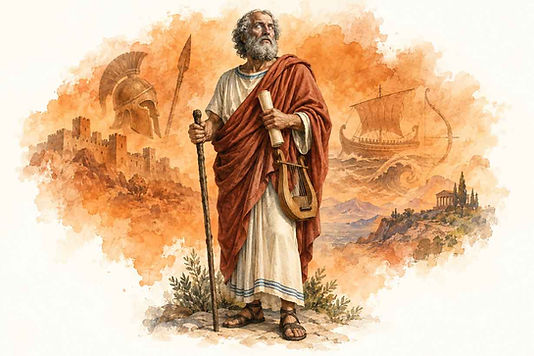

Mythopouch artistic interpretations
English Edition Translation used on this Page
Samuel Butler · 1898 · Longmans, Green, and Co.
Time Period
Ancient Greek epic traditionally dated to about 750 BCE. Public-domain English prose witness: Samuel Butler, 1898.
Introduction - Overview
The Iliad is the ancient Greek epic traditionally attributed to Homer, centred on the wrath of Achilles during the Trojan War. It does not narrate the whole war or the fall of Troy. Its main arc follows the quarrel between Achilles and Agamemnon, Achilles's withdrawal from battle, the fighting that follows, the death of Patroclus, Achilles's return, Hector's death, and Priam's recovery of his son's body.
The downloadable historical source witness for this page is Samuel Butler's 1898 English prose translation, The Iliad of Homer. Butler's title page describes the work as rendered into English prose for readers who could not read the original.


The Work...
The Iliad of Homer
The Iliad is arranged in twenty-four books. Butler's edition preserves that book structure and provides a continuous English prose witness to the poem, from the quarrel of Achilles and Agamemnon in Book I through Priam's ransom of Hector and Hector's funeral in Book XXIV.
The poem concentrates on a short period in the tenth year of the Trojan War rather than telling the entire Trojan cycle. Its central concerns include honour, anger, mortality, friendship, divine intervention, battlefield duty, grief, burial and reconciliation. Achilles is the poem's dominant figure, but Hector, Patroclus, Priam, Helen, Andromache, Agamemnon, Odysseus, Ajax, Diomedes and the Olympian gods all shape its movement.
Samuel Butler's 1898 edition is used by Mythopouch as a historical English source witness. The Mythopouch retelling is separate modern educational wording for readers aged 15 and up. It is not Butler's translation and it is not the Greek text.
Use this Sources page when you want the historical prose witness behind the retelling. Use the Retellings page when you want the same broad Iliad narrative presented in modern Mythopouch form, with pronunciation help, mythology notes, footnotes, reflection questions and reference tables.


Summary
The Iliad is the ancient Greek epic of Achilles's wrath and its consequences during the Trojan War. Mythopouch supplies Samuel Butler's 1898 public-domain English prose translation as the historical source witness for its modern retelling.
Source Note
The ancient Greek Iliad and Samuel Butler's 1898 English prose translation are public-domain source material. The Cornell and Internet Archive scan supplied for this record states that there are no known copyright restrictions in the United States on use of the text. Mythopouch should distribute the verified public-domain source file as the historical witness.
Sources & Retellings Cultural Context Notice
Mythology developed across different cultures, periods and traditions, and there is rarely one universally accepted version of a story. Mythopouch approaches these traditions with respect while remaining faithful to the complexity of the surviving material. Retellings and educational content may interpret or adapt historical sources, but are not presented as definitive accounts of any culture, religion or belief system.