
Details
Region
Egyptian
Regional Information Additional (if applicable)
Ancient Egypt
Category
Artifact/Object/Weapon
Historicity (actuality or factual truth of persons, events, and claims)
Historical
Gender
N/A
Time Period
c. 3500 BCE - 395 CE (Predynastic to Roman period); literary tradition c. 2400-1550 BCE (Pyramid Texts to Book of the Dead)
Symbol
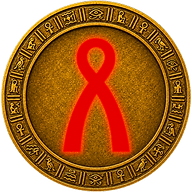
The knotted loop of cloth with hanging sash, blood-red, the emblem of Isis's protective magic
Tags
egyptian, tyet, artefact, isis, knot-of-isis, blood-of-isis, book-of-the-dead, osiris, amulet, nephthys, djed-pillar
Introduction - Overview
The Tyet is the knotted amulet that ancient Egyptians called the Blood of Isis, the loop of cloth dyed red with carnelian or jasper that they placed at the neck of every mummy from the New Kingdom onward as proof that the greatest magician in their pantheon had pledged her protection. It is the symbol that resembles an ankh, the Egyptian sign for life, except that its crossbar is folded down like arms reaching toward the earth rather than raised toward the sky. It is the amulet that the Book of the Dead, the great collection of funerary spells compiled between 1550 and 1070 BCE, instructed embalmers to make from red stone and place at the throat of the deceased, with the words: "You have your blood, O Isis; you have your power, O Isis; you have your magic, O Isis." It is the knot that appears in the Pyramid Texts carved into the walls of King Unas's pyramid at Saqqara around 2400 BCE, where Isis and her sister Nephthys are said to work magic on the dead king with knotted cords, binding and releasing the forces of life and death. It is the emblem that began as a decorative motif in the Third Dynasty, long before Isis herself was widely worshipped, and that was absorbed into her cult by the New Kingdom, when it became inseparable from the djed pillar of her husband Osiris, the two symbols together representing the masculine and feminine powers that engender life. And it is the most intimate symbol in Egyptian religion, the amulet that scholars have interpreted as a menstrual cloth, a ritual tampon, a representation of the womb, and a knot of knotted magic, all at once, the red loop that carried the blood and power of the goddess who raised her murdered husband from the dead and protected her son Horus from every serpent and scorpion in the marsh.
Gallery
Main Article - Who or What was...
Tyet
The Tyet first appears in the archaeological record during the Predynastic period, before the unification of Egypt under King Narmer around 3100 BCE, though its earliest secure example comes from a First Dynasty tomb at Helwan, excavated by the Egyptologist Zaki Saad in the 1940s. This example predates the first written references to Isis herself, and the symbol may not have been connected with the goddess at that early stage. By the Third Dynasty of the Old Kingdom, roughly 2686 to 2613 BCE, the Tyet was already a popular decorative motif, appearing alongside the ankh and the djed pillar on temple walls, columns, sarcophagi, and shrines. In these early contexts it was sometimes combined with the bovine faces of the goddesses Bat and Hathor, the cow goddesses of fertility and music, and it served as a badge of office for the kherep-ah, the palace manager who oversaw the royal household. The symbol thus began its life not as a funerary amulet but as an administrative and decorative emblem, a knot that secured things and marked authority.
The design of the Tyet is unmistakable. It consists of a loop of cloth, tied in a knot, with two sashes hanging down below the loop on either side. In this respect it closely resembles the ankh, the Egyptian hieroglyph for life, and some scholars believe the Tyet was originally a variant of the ankh, its arms bent downward to distinguish it from its more famous cousin. Like the ankh, the Tyet sign is often translated as "life" or "welfare," and in representational contexts it appears in the same places: on temple walls, on coffins, on the shrines that housed statues of the gods. But where the ankh is the sign of life in general, the Tyet became the sign of life through blood, through the female body, through the protective magic of the goddess who was mistress of both.
The association with Isis solidified during the New Kingdom, from 1550 to 1070 BCE, perhaps because the Tyet was so frequently paired with the djed pillar, the symbol of Osiris, Isis's murdered husband and the king of the dead. The djed is a pillar with four horizontal bars, representing the backbone of Osiris and the stability of the cosmos, and when the Tyet and the djed appear together, they allude to the divine couple whose love and magic conquered death itself. In this pairing, the djed represents masculine power and the Tyet represents feminine power, the pillar and the knot, the backbone and the womb, the god who was killed and the goddess who brought him back. The two symbols are frequently carved together in decorative bands on temple walls and columns, and they appear together on the sarcophagus of Tutankhamun, the boy king whose tomb preserved so much of New Kingdom art in perfect condition.
The Tyet's most powerful association is with blood, specifically the blood of Isis. The Book of the Dead, Spell 156, gives the classic formula for the amulet: "The blood of Isis, the spells of Isis, the magical words of Isis shall keep this great one strong, and shall protect him from whosoever would harm him, do to him such things as he abominateth." The spell instructs that the amulet be made of red jasper, carnelian, or red glass, materials whose colour matched the blood that the amulet represented. Red glass was particularly precious, as its colour came from the addition of gold to the molten glass, making the amulet not only magically potent but materially valuable. The Metropolitan Museum of Art holds a Tyet amulet of red jasper from Abydos, dating to the New Kingdom, six and a half centimetres high, its loop perfectly carved and its sashes hanging straight, the colour of dried blood preserved in stone for three thousand years.
Yet the Tyet was not always red. Tutankhamun was buried with a beautiful blue Tyet amulet, the colour of Egyptian faience, whose blue represented the renewal of life rather than the blood that sustained it. Other amulets were fashioned from yellow sycamore wood, the tree sacred to Nut, Isis, and Hathor, the great sky goddess who was mother to Isis and grandmother to Horus. These variations suggest that the Tyet's meaning was flexible, that the knot could represent blood or rebirth, death or life, depending on the material and the context in which it was used.
The meaning of the Tyet's shape has been debated for generations. The most widely accepted interpretation is that it represents a knotted piece of cloth, perhaps the girdle or sash that tied the garments of the gods in Egyptian art. Knots were widely used as amulets because the Egyptians believed they bound and released magic, and the Pyramid Texts, the oldest religious texts in the world carved into the walls of the pyramid of Unas at Saqqara around 2400 BCE, record that "Isis and Nephthys work magic on Thee with knotted cords." In this context, the Tyet is a magical knot, a binding that holds the forces of chaos at bay and releases the forces of life into the body of the dead king.
Other interpretations are more specific and more intimate. Some scholars, following the Egyptologist E.A. Wallis Budge, have suggested that the Tyet represents the female reproductive organs, the stylised vulva and womb of Isis in her role as the universal mother. Others have proposed that it depicts the cloth worn by Egyptian women during menstruation, a sanitary cloth or girdle that caught the blood that the Egyptians considered powerfully magical. A still more specific theory holds that the Tyet represents a ritual tampon inserted into the vagina to prevent miscarriage, and that Isis herself used such a device to protect Horus while he was still within her womb, keeping him safe from the serpents and scorpions that her brother Set, the god of chaos and storms, sent against the infant god. Chapter 156 of the Book of the Dead confirms that the fertility of Isis, linked with blood, is intact, and the amulet has been found tucked between the legs of pregnant women in tombs, as if the knot were still performing its protective function in the grave.
The Tyet was not exclusively Isis's. In the Third Intermediate Period and later, the symbol was also associated with Nephthys, Isis's sister and the guardian of the dead, and with Nut, the sky goddess and mother of the divine siblings. In some Late Period statues, the Tyet is personified as a goddess in her own right, the knot forming the shape of a dress with a centre part and side pieces, the garment's stylised belt becoming the body of a deity. These personified Tyets appear in contexts of resurrection and eternal life, the knot transformed from an amulet into a living goddess who protects the dead. In the Graeco-Roman period, the tradition of tying the Knot of Isis into the robes of priestesses spread from Egypt across the Mediterranean, and statues of Isis from Hadrian's villa at Tivoli show the goddess with knots tied into the straps of her clothing, the magical binding visible to every worshipper who approached her shrine.
Summary
The Tyet endures as the most intimate symbol in Egyptian religion, the knotted amulet that carried the blood and magic of Isis across three millennia of burial and belief. From the Predynastic tombs of Helwan to the Pyramid Texts of Unas, from the red jasper amulets of the Valley of the Kings to the blue faience of Tutankhamun's tomb, the knot tells a story about the power of the female body to protect, to bind, and to release. It is the reminder that the greatest magic is sometimes the simplest, a knot in a piece of cloth, and that the blood of the goddess who raised the dead is still potent enough to guard the living.
Now enter the Mythopouch World!
You’ve discovered:
Tyet
From Myth to Game
Join to access FREE real-world mythology "Learn Quests" and "Courses". Sign up to the newsletter for new releases, game updates, insider news, and more as Mythopouch brings real mythology to life. EARN the right to purchase an offline board game by completing FREE modules.


It's FREE to join as a MEMBER!
Not ready to join? Get the newsletter instead below


Looking for others?
Click into the field below to search, or click the icon to go to full page search function!

Looking for Mythology Insights?


Click below to view our mythology blog article insights, where we delve into the current Mythopouch Tier regions, and what we think you should know!
Sources & Retellings
Explore the original mythological Source texts (most from over 75 years ago, some as translated, possibly with mature content) and Mythopouch's source Retellings (a modern retelling also suitable for 15+) connected to this mythological entity. We are growing this resource and will link these in the future; for now, check the References below, then find the Sources or Retellings on those pages!


References
Validation References:
- Pyramid Texts of King Unas, c. 2400-2300 BCE, Pyramid of Unas at Saqqara - "Isis and Nephthys work magic on Thee with knotted cords"; the earliest textual reference to knot magic
- Book of the Dead, Spell 156, c. 1550-1070 BCE (New Kingdom) - "The blood of Isis, the spells of Isis, the magical words of Isis shall keep this great one strong"; instructions for the Tyet amulet at the neck
- First Dynasty Tyet from tomb at Helwan, c. 3100-2890 BCE - earliest secure archaeological example of the symbol, predating written references to Isis
- Sarcophagus of Tutankhamun, c. 1323 BCE, Valley of the Kings - the Tyet paired with the djed pillar in royal funerary decoration
- Andrews, Carol, Amulets of Ancient Egypt (University of Texas Press, 1994) - scholarly analysis of Tyet amulets, their materials, and their placement in mummy wrappings
- Wilkinson, Richard H., Reading Egyptian Art: A Hieroglyphic Guide to Ancient Egyptian Painting and Sculpture (Thames and Hudson, 1992) - the Tyet hieroglyph and its use in temple and tomb iconography
- Wilkinson, Richard H., The Complete Gods and Goddesses of Ancient Egypt (Thames and Hudson, 2003) - analysis of Isis, Nephthys, and the divine associations of the Tyet
- Griffiths, J. Gwyn, The Origins of Osiris and His Cult (E.J. Brill, 1980) - scholarly study of the Osiris cult and the absorption of earlier symbols including the Tyet
- Griffiths, J. Gwyn, "Isis," in The Oxford Encyclopedia of Ancient Egypt, ed. Donald B. Redford (Oxford University Press, 2001) - scholarly overview of Isis and her symbols including the Blood of Isis
- Pinch, Geraldine, Handbook of Egyptian Mythology (ABC-CLIO, 2002) - analysis of the Tyet's mythological associations and its function in funerary religion
- Allen, James P., Middle Egyptian: An Introduction to the Language and Culture of Hieroglyphs (Cambridge University Press, 2014) - linguistic analysis of the tjt hieroglyph and its meanings
- Mohamed, Ghada, "Und das Isis-Blut hat seine Arme in meine Richtung gereicht: Darstellung, Bedeutung und Funktion des anthropomorphisierten Tit-Knotens im alten Agypten," Journal of the American Research Center in Egypt 60 (2024): 227-246 - scholarly study of the personified Tyet in Late Period statuary
Cultural Context Notice
Mythology developed across different cultures, periods and traditions, and there is rarely one universally accepted version of a story. Mythopouch approaches these traditions with respect while remaining faithful to the complexity of the surviving material. Retellings and educational content may interpret or adapt historical sources, but are not presented as definitive accounts of any culture, religion or belief system.