Egyptian

Details
Region
Egyptian
Regional Information Additional (if applicable)
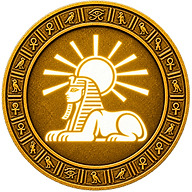
New Kingdom solar cult / Great Sphinx of Giza / royal legitimacy
Category
Deity
Historicity (actuality or factual truth of persons, events, and claims)
Mythological
Gender
Male
Time Period
New Kingdom cult attested from the Eighteenth Dynasty onward; associated with the much older Great Sphinx of the Fourth Dynasty
Symbol
Sphinx & rising sun
Tags
horemakhet, hor-em-akhet, sphinx, giza, horus, solar-god, thutmose-iv, dream-stela, new-kingdom
Introduction - Overview
Horemakhet, 'Horus in the Horizon', is the New Kingdom divine identity of the Great Sphinx of Giza. The physical Sphinx is far older, generally dated to the Fourth Dynasty, but its Old Kingdom name is unknown and evidence for an active Sphinx cult at that time is limited. By the Eighteenth Dynasty the monument was worshipped as Horemakhet, a solar and royal god whose cult transformed the ancient statue into a focus of kingship, pilgrimage and personal devotion. The Dream Stela of Thutmose IV gives the most famous statement of that theology: the Sphinx speaks as Horemakhet-Khepri-Ra-Atum and promises the prince kingship if he clears away the sand surrounding the divine body. A separate Horemakhet record is therefore useful even though Mythopouch also has a Sphinx record, because this page concerns the deity and New Kingdom cult rather than the monument's entire architectural history.
Gallery
Main Article - Who or What was...
Horemakhet
The Great Sphinx was already more than a thousand years old when the name Horemakhet appears in New Kingdom evidence. Ancient Egypt Research Associates notes that hundreds of Old Kingdom tomb inscriptions at Giza have not produced recognisable titles for priests of the Sphinx, suggesting that the later cult was not simply a continuous institution from the Fourth Dynasty. The monument's original ancient name remains unknown.
Amenhotep II helped establish the New Kingdom religious landscape around the Sphinx. Foundation deposits and nearby monuments name Horemakhet, and a temple was built north-east of the great statue. The Sphinx enclosure itself was called Setepet, 'The Chosen', in New Kingdom sources, a name that may reflect the monument's association with royal legitimacy and visits by kings.
The Dream Stela of Thutmose IV stands between the Sphinx's paws and gives the cult its best-known narrative. The prince rests in the monument's shade at midday and dreams that the god addresses him. Horemakhet-Khepri-Ra-Atum promises him the crowns and kingship of Egypt and asks him to remove the sand that has buried the divine body. The stela was erected in the first year of Thutmose IV's reign and is cut from a reused granite doorway lintel from Khafre's mortuary complex.
The dream is often interpreted as royal legitimisation, but it should not be treated as proof that Thutmose IV certainly usurped an elder brother. The text presents direct divine selection and therefore served the politics of kingship, yet the exact succession circumstances remain debated. The safest conclusion is that the stela publicly links Thutmose's rule with the favour of Horemakhet.
Horemakhet was strongly solar. The Dream Stela joins his name with Khepri, Ra and Atum, forms associated with the sun's cyclical manifestation. AERA also notes the visual relationship between the Sphinx and the hieroglyph akhet, the horizon sign, when the statue is viewed against the pyramids. This observation helps explain the later name but should not be turned into proof that the entire Fourth Dynasty complex was originally designed to spell the hieroglyph.
The cult also absorbed a western Asiatic deity, Hauron. New Kingdom votive material uses forms such as Hauron-Horemakhet, showing that the Sphinx could become a meeting point between Egyptian solar kingship and a Levantine protective or desert god. The precise path of that identification remains debated, so it is better to record the syncretism than to assign it to one particular ethnic group of workers without qualification.
Horemakhet's identity is inseparable from the Sphinx but not identical with every aspect of the monument. The stone statue belongs to Old Kingdom royal architecture; Horemakhet is the later deity through whom New Kingdom Egyptians interpreted and worshipped that ancient image. Keeping the two records distinct allows Mythopouch to explain both the monument's physical history and the later theology that gave it a divine voice.
Summary
Horemakhet endures as the New Kingdom god of the Great Sphinx, a solar form of Horus through whom an ancient royal monument became an active cult image. Amenhotep II developed worship around the Sphinx, and Thutmose IV's Dream Stela famously has Horemakhet-Khepri-Ra-Atum promise the prince kingship in exchange for clearing the sand. The stela certainly links divine favour with royal legitimacy, although it does not prove a specific disputed succession. Later devotion could also identify the god with Hauron. Horemakhet is therefore best understood as the cultic and theological identity of the Sphinx in the New Kingdom and later periods.
Now enter the Mythopouch World!
You’ve discovered:
Horemakhet
From Myth to Game
Join to access FREE real-world mythology "Learn Quests" and "Courses". Sign up to the newsletter for new releases, game updates, insider news, and more as Mythopouch brings real mythology to life. EARN the right to purchase an offline board game by completing FREE modules.


It's FREE to join as a MEMBER!
Not ready to join? Get the newsletter instead below


Looking for others?
Click into the field below to search, or click the icon to go to full page search function!

Looking for Mythology Insights?


Click below to view our mythology blog article insights, where we delve into the current Mythopouch Tier regions, and what we think you should know!
Sources & Retellings
Explore the original mythological Source texts (most from over 75 years ago, some as translated, possibly with mature content) and Mythopouch's source Retellings (a modern retelling also suitable for 15+) connected to this mythological entity. We are growing this resource and will link these in the future; for now, check the References below, then find the Sources or Retellings on those pages!


References
Validation References:
- Ancient Egypt Research Associates, The Sphinx as a National Park - New Kingdom cult, name Hor-em-akhet and Setepet.
https://aeraweb.org/national-park/
- Ancient Egypt Research Associates, Mapping the Sphinx - Dream Stela, Thutmose IV restoration and reused Khafre lintel.
https://aeraweb.org/mapping-the-sphinx/
- ARCE, The Long-Hidden Sphinx Mapping Project Is Unveiled - New Kingdom activation of the Horemakhet cult and Dream Stela context.
https://arce.org/resource/long-hidden-arce-sphinx-mapping-project-unveiled/
- Dream Stela of Thutmose IV, Year 1 - Horemakhet-Khepri-Ra-Atum and the promise of kingship.
- Christiane Zivie-Coche, Sphinx: History of a Monument - development of the Sphinx cult and New Kingdom religious interpretation.
- New Kingdom Giza votive evidence for Hauron-Horemakhet - syncretic form of the Sphinx deity.
Cultural Context Notice
Mythology developed across different cultures, periods and traditions, and there is rarely one universally accepted version of a story. Mythopouch approaches these traditions with respect while remaining faithful to the complexity of the surviving material. Retellings and educational content may interpret or adapt historical sources, but are not presented as definitive accounts of any culture, religion or belief system.