Arthurian
Uther Pendragon
Name in Non-English, or Alternative Name/s
Uthyr Pendragon (Welsh), Uterpendragon (Middle English), Uthyr Pen
Also known as, and/or Titles and Roles
The Dragon's Head, the Father of Arthur, the Brother of Aurelius, the Raiser of Stonehenge, the Deceiver of Tintagel

Mythopouch artistic interpretation
Details
Region
Arthurian
Regional Information Additional (if applicable)
British/Celtic
Category
Person
Historicity (actuality or factual truth of persons, events, and claims)
Legendary
Gender
Male
Time Period
5th-6th centuries CE (mythic Arthurian period); literary tradition c. 1136-present, with earlier Welsh roots
Symbol
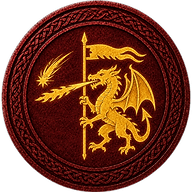
The golden dragon standard, the comet with the dragon's beam, the horse-litter of the sick king
Tags
arthurian, uther-pendragon, king, merlin, igraine, tintagel, stonehenge, aurelius-ambrosius, gorlois, dragon, britain, saxons
Introduction - Overview
Uther Pendragon is the father of King Arthur and the storm before the golden age, the fierce, lovesick and war-haunted king of Britain whose single night at Tintagel begot everything that followed. He is the younger brother of Aurelius Ambrosius, who fought the Saxons at his brother's side, led the expedition that carried the Giant's Dance from Ireland to raise Stonehenge, and took the dragon's name from a blazing star that promised him the crown. He is the king who burned with desire for Igraine, the wife of his own Duke of Cornwall, and who wore another man's face, by Merlin's craft, to enter her chamber while her true husband died that same night at his siege. He is the sick king carried in a litter to his last victory, poisoned by the spring he trusted, and laid to rest among the stones he had raised. And he is the darker half of the Arthurian beginning, the passion to Arthur's justice, the deception that made the king and planted the seed of all that came after.
Gallery
Main Article - Who or What was...
Uther Pendragon
The name is older than the story. Welsh poetry knew an Uthyr Pendragon long before the French romances: the Book of Taliesin preserves the Death-song of Uthyr Pen, a eulogy spoken in the voice of a formidable warrior, and the Welsh Triads credit Uthyr with one of the three great enchantments of Britain, which he taught to the magician Menw. The title itself is Welsh: pen means head or chief, and dragon, borrowed long before from the Roman legions' standards, meant in Welsh verse a warlord. Uther Pendragon is therefore something like Supreme Warrior, the dragon's head. It was Geoffrey of Monmouth, however, who made him a king and a biography. Geoffrey even supplies an explanation for the name, and it is one of his finest inventions.
In the Historia Regum Britanniae, completed around 1136, Uther is the youngest son of King Constantine and the brother of Aurelius Ambrosius. When the usurper Vortigern falls with his Saxon allies, Aurelius takes the crown, and Uther fights beside him against Hengist and the broken invaders. It is Uther who leads the expedition to Ireland, with fifteen thousand men and Merlin for his engineer, to fetch the Giant's Dance from Mount Killaraus, the circle of enchanted stones that Merlin re-erects on Salisbury Plain as a memorial to the British nobles murdered by Hengist's knives at a peace parley, the Treachery of the Long Knives. Stonehenge is thus, in the Arthurian telling, Uther's monument before it is his tomb. While Uther fights Vortigern's son Pascentius and his Irish allies in Wales, a Saxon named Eopa, disguised as a physician, poisons Aurelius at Winchester. That same night a star of wonderful brightness climbs the sky, trailing a beam that ends in a ball of fire shaped like a dragon. Merlin reads it: Aurelius is dead, Uther shall be king, and the dragon's outstretched ray is the son who shall come from him, whose power shall cover all the lands it touches. Uther takes the name Pendragon, and has two golden dragons made, one for the cathedral at Winchester and one to carry before him into battle.
Then comes the story for which he is remembered. At a high feast in London, Uther sees Igraine, the wife of Gorlois, Duke of Cornwall, and his desire is open and instant. Gorlois takes his wife from court; Uther makes war on Cornwall; the duke shuts Igraine in the sea-girt fortress of Tintagel and holds himself at the castle of Dimilioc. Uther, wasting with longing, turns to Merlin, who agrees to help on terms that will shape the age. By his craft Merlin gives Uther the face and form of Gorlois, and disguises himself and the king's chamberlain Ulfin as the duke's knights. That night Uther enters Tintagel unchallenged, lies with Igraine as her husband, and Arthur is conceived. That same night the real Gorlois sallies from Dimilioc and is killed. The scandal dissolves into convenience: the duke is dead, the widow is free, and Uther marries Igraine, who bears him Arthur and, in Geoffrey's account, a daughter, Anna.
The end comes as it came to his brother. The Saxons rise again under Octa, the son of Hengist, and Eosa his kinsman, and Uther, grown old and sick, lets his lords quarrel until the realm is in peril, then has himself carried in a horse-litter to Verulamium, where the Britons win the field and take the Saxon leaders prisoner. The defeated invaders take their revenge by stealth: they bribe the king's servants, and when they learn that the sick Uther drinks only the water of one clear spring, they poison the spring. Uther dies, and the Britons carry him to Stonehenge and lay him within the stone circle beside Aurelius Ambrosius, the brother whose crown the comet had promised him.
Malory's Le Morte d'Arthur compresses and darkens the tale. His Merlin does not offer help as a favour but drives a bargain: Uther shall have his desire of Igraine, and the child that comes of it shall be delivered to Merlin to be reared as he will. Uther swears, and keeps the oath. Igraine's daughters by Gorlois are disposed of in marriage and religion: Margawse to King Lot of Orkney, Elaine to King Nentres of Garlot, and the youngest, Morgan, to a nunnery, where she learns her necromancy, before she is given to King Uriens of Gore. The infant Arthur is handed to Merlin and fostered in secret by Sir Ector, and within two years Uther falls sick, wins his last field from a litter at St Albans, lies speechless for three days, and dies with the succession hidden, leaving the realm in jeopardy until the sword appears in the stone. The tragedy of Malory's Arthur is planted exactly here, in his father's night of deception, for the disguised king who begot a son on a deceived wife will have that sin answered in kind.
Uther endures because he is the necessary shadow before the light. He is the passion to his son's justice, the war that won the peace Arthur would rule, the dragon whose banner and name descended to the greater king. The romances make him the patron of their greatest wonders: Stonehenge stands because he fetched the stones, and the Round Table, in the Vulgate tradition, is made by Merlin in his reign. Modern tellings have made him harsher still, from the desperate warlord of the film Excalibur to the magic-burning tyrant of the BBC's Merlin, where he rules Camelot as the stern father Arthur must both honour and surpass. He is the reminder that the golden age was conceived in disguise, and that Merlin built the future out of very flawed materials.
Summary
Uther Pendragon endures as the shadowed beginning of the Arthurian story, the dragon-bannered king whose wars won the peace his son would rule and whose one night of deception begot both Arthur and all that Arthur's reign would answer for. From the Welsh death-song of Uthyr Pen to Geoffrey's comet, from the raising of Stonehenge to the poisoned spring, he is the fierce older world that Merlin bent toward a design it never understood. He is the reminder that the golden age was conceived in disguise, and that the father gave the son everything except a clean beginning.
Now enter the Mythopouch World!
You’ve discovered:
Uther Pendragon
From Myth to Game
Join to access FREE real-world mythology "Learn Quests" and "Courses". Sign up to the newsletter for new releases, game updates, insider news, and more as Mythopouch brings real mythology to life. EARN the right to purchase an offline board game by completing FREE modules.


It's FREE to join as a MEMBER!
Not ready to join? Get the newsletter instead below


Looking for others?
Click into the field below to search, or click the icon to go to full page search function!

Looking for Mythology Insights?


Click below to view our mythology blog article insights, where we delve into the current Mythopouch Tier regions, and what we think you should know!
Sources & Retellings
Explore the original mythological Source texts (most from over 75 years ago, some as translated, possibly with mature content) and Mythopouch's source Retellings (a modern retelling also suitable for 15+) connected to this mythological entity. We are growing this resource and will link these in the future; for now, check the References below, then find the Sources or Retellings on those pages!


References
Validation References:
- Book of Taliesin, Marwnat Uthyr Pen (The Death-song of Uthyr Pen), 14th-century manuscript of older Welsh verse - the earliest surviving Uthyr
- Welsh Triads - Uthyr Pendragon and the great enchantments of Britain
- Geoffrey of Monmouth, Historia Regum Britanniae, c. 1136 - the full biography: Aurelius, the comet, Stonehenge, Igraine and the poisoned spring
- Wace, Roman de Brut, 1155 - the Norman-French retelling of Uther's reign
- Layamon, Brut, c. 1190-1215 - the English expansion of the story
- Lancelot-Grail (Vulgate Cycle), the Estoire de Merlin, c. 1215-1235 - Merlin, the Round Table and Uther's reign
- Thomas Malory, Le Morte d'Arthur, c. 1470 (Caxton edition 1485) - the bargain for the child, Terrabil, the fostering of Arthur and the speechless death
- Stewart, Mary, The Crystal Cave, 1970 - the modern Uther and Ambrosius
- Padel, O.J., Arthur in Medieval Welsh Literature (University of Wales Press, 2000) - the Welsh evidence for Uthyr Pendragon
- Loomis, Roger Sherman, The Development of Arthurian Romance (Hutchinson, 1963) - Uther across the traditions
Cultural Context Notice
Mythology developed across different cultures, periods and traditions, and there is rarely one universally accepted version of a story. Mythopouch approaches these traditions with respect while remaining faithful to the complexity of the surviving material. Retellings and educational content may interpret or adapt historical sources, but are not presented as definitive accounts of any culture, religion or belief system.