Arthurian

Details
Region
Arthurian
Regional Information Additional (if applicable)
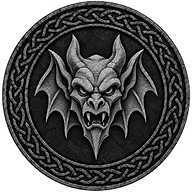
European Gothic / medieval architecture / Arthurian visual tradition
Category
Artifact/Object/Weapon
Historicity (actuality or factual truth of persons, events, and claims)
Historical
Gender
N/A
Time Period
Medieval architectural tradition, especially Gothic Europe from the 12th century onward; later revived in Gothic Revival and fantasy
Symbol
Gargoyle face
Tags
gargoyle, gargouille, grotesque, gothic-architecture, stone-sentinel, la-gargouille, saint-romanus, camelot, medieval-architecture
Introduction - Overview
A gargoyle is a carved architectural waterspout designed to throw rainwater clear of a building's walls. Medieval builders often shaped these projecting spouts as animals, monsters or grotesque human faces, turning practical drainage into dramatic sculpture. A carved grotesque that carries no water is technically not a gargoyle, although modern speech often uses the same word for both. Rouen preserves a separate local legend of Saint Romanus defeating a dragon called La Gargouille, but that story should not be treated as the proven origin of all architectural gargoyles. Gargoyles do not play a speaking or fighting role in the medieval Arthurian romances; their connection with Camelot belongs mainly to later Gothic visualisations of castles, chapels and fantasy worlds.
Gallery
Main Article - Who or What was...
Gargoyle
Rouen preserves a famous local legend in which the seventh-century bishop Saint Romanus defeats a dragon or water monster called La Gargouille with the help of a condemned prisoner. The legend became tied to Rouen's civic and religious memory, but it is a legend about a monster, not evidence that architectural gargoyles everywhere descend from that event. The similarity of the names helped later storytelling join the Rouen dragon to the carved waterspout.
The architectural gargoyle is first of all a drainage device. Medieval masons channelled roof water through a projecting stone spout so that rain would fall away from masonry, mortar and foundations. The projection could be carved into a dragon, dog, lion, bird, demon or distorted human form without changing its practical job. This functional distinction matters: a grotesque may look equally monstrous, but if it does not conduct water it is not technically a gargoyle.
Gargoyles became especially conspicuous on Gothic churches and other large medieval buildings. Their shapes vary widely, and surviving examples mix fearsome animals with comic, hybrid and human forms. The sculpture belongs to the wider medieval taste for marginal creatures on corbels, capitals, manuscripts and rooflines. No single medieval text gives one universal meaning for these figures.
Protective or apotropaic interpretations are often proposed for frightening architectural sculpture, but the meanings of individual gargoyles are rarely documented. Some may have been warnings, jokes, caricatures or moral images; others may simply have allowed masons creative freedom around a necessary water channel. Bernard of Clairvaux's famous complaint about monstrous carvings in monasteries shows how striking such imagery could be, but it does not provide a single explanation for every gargoyle.
Arthurian literature does not give the gargoyle an independent medieval myth. Its Mythopouch connection is visual and historical: later artists, filmmakers and fantasy designers often imagine Camelot and other Arthurian strongholds in Gothic architectural forms that naturally include gargoyles and grotesques. The creature therefore belongs to the later visual language surrounding medieval Arthurian settings rather than to an original episode in the romances.
The idea that a gargoyle can leave its perch is much younger than the stones. Nineteenth-century Gothic Revival architects fill new buildings with medieval-looking beasts, and Eugène Viollet-le-Duc, the French restorer of Notre-Dame, creates the famous chimeras now mistaken for medieval originals. Horror writers, fantasy artists, and role-playing games turn the stone sentinel into a living creature that wakes at night. The modern gargoyle flies, fights, and broods above the city. The medieval one remains where the mason placed it.
At sunrise the gargoyle is only stone. At sunset its shadows lengthen across the roof. When rain strikes the tower, its hidden throat fills, its jaws open, and water leaps away from the wall. Below, travellers pull their cloaks tighter and hurry toward the gate. Above them, the carved beast keeps the only watch it has always kept: silent, patient, and ready to speak with the voice of falling rain.
Summary
The gargoyle endures as one of medieval architecture's most recognisable combinations of engineering and imagination. Its defining historical function is drainage: water passes through or along the carved projection and falls away from the wall. Monster-shaped waterspouts share medieval visual culture with non-functional grotesques, but the two terms are not technically identical. Rouen's legend of Saint Romanus and La Gargouille is an important local dragon story, not a proven origin story for every gargoyle. The familiar living stone guardian belongs chiefly to modern Gothic and fantasy storytelling.
Now enter the Mythopouch World!
You’ve discovered:
Gargoyle
From Myth to Game
Join to access FREE real-world mythology "Learn Quests" and "Courses". Sign up to the newsletter for new releases, game updates, insider news, and more as Mythopouch brings real mythology to life. EARN the right to purchase an offline board game by completing FREE modules.


It's FREE to join as a MEMBER!
Not ready to join? Get the newsletter instead below


Looking for others?
Click into the field below to search, or click the icon to go to full page search function!

Looking for Mythology Insights?


Click below to view our mythology blog article insights, where we delve into the current Mythopouch Tier regions, and what we think you should know!
Sources & Retellings
Explore the original mythological Source texts (most from over 75 years ago, some as translated, possibly with mature content) and Mythopouch's source Retellings (a modern retelling also suitable for 15+) connected to this mythological entity. We are growing this resource and will link these in the future; for now, check the References below, then find the Sources or Retellings on those pages!


References
Validation References:
- The Metropolitan Museum of Art, Turret Laver, 15th century - museum discussion notes that its small heads imitate architectural gargoyles designed to manage rainwater.
- City of Rouen heritage material on Saint Romanus and La Gargouille - municipal presentation of the Rouen dragon story explicitly as a local legend.
- Bernard of Clairvaux, Apologia ad Guillelmum Abbatem, c. 1125 - medieval complaint about monstrous architectural imagery in monastic settings.
- Eugène-Emmanuel Viollet-le-Duc, Dictionnaire raisonné de l'architecture française du XIe au XVIe siècle, entry 'Gargouille' - historical architectural discussion of the form.
- Janetta Rebold Benton, Holy Terrors: Gargoyles on Medieval Buildings (Abbeville Press, 1997) - modern study of gargoyles, grotesques and medieval architectural imagery.
- Alex Woodcock, Gargoyles and Grotesques (Shire Publications, 2011) - overview of function, terminology and surviving examples.
Cultural Context Notice
Mythology developed across different cultures, periods and traditions, and there is rarely one universally accepted version of a story. Mythopouch approaches these traditions with respect while remaining faithful to the complexity of the surviving material. Retellings and educational content may interpret or adapt historical sources, but are not presented as definitive accounts of any culture, religion or belief system.