The Odyssey

The Odyssey

Greek
The Odyssey
Name in Non-English, or Alternative Name/s
The Odyssey; Odyssey; Homer's Odyssey; Odysseia
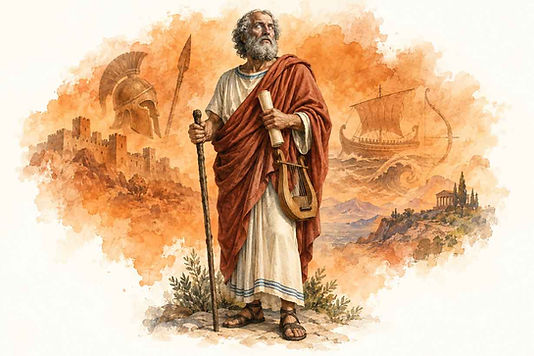

Mythopouch artistic interpretations
English Edition Translation used on this Page
Samuel Butler · 1900 · A. C. Fifield, London
Time Period
Ancient Greek epic, conventionally dated to around the late 8th or early 7th century BCE; Samuel Butler English prose translation published in 1900.
Introduction - Overview
The Odyssey is the ancient Greek epic of Odysseus's long return from the Trojan War to his island kingdom of Ithaca. Traditionally attributed to Homer, it combines the wanderings of Odysseus with the story of Penelope and Telemachus resisting the suitors who have occupied his household.
The historical English source supplied by Mythopouch is Samuel Butler's prose translation, published in London by A. C. Fifield in 1900. Butler renders many Greek divine and heroic names in the Latinised forms common in his period, including Ulysses, Minerva, Neptune and Jove.
This public-domain witness is provided so readers can compare the Mythopouch retelling with a complete historical English version of the epic.


The Work...
The Odyssey
The Odyssey is arranged in twenty-four books. Its opening books follow Telemachus as he searches for news of his missing father and confronts the suitors consuming the wealth of Odysseus's household. The poem then turns to Odysseus, held on Calypso's island, before following his release, shipwreck and arrival among the Phaeacians.
Books IX to XII contain the famous first-person account of Odysseus's wanderings after Troy. These episodes include the Cicones, Lotus-Eaters, Polyphemus the Cyclops, Aeolus and the winds, the Laestrygonians, Circe, the journey to the dead, the Sirens, Scylla and Charybdis, and the cattle of the Sun. The Phaeacians finally carry Odysseus home to Ithaca.
The later books shift from travel to recognition, disguise and restoration. Odysseus returns as a beggar, reunites with Telemachus, tests the loyalty of servants and household members, speaks with Penelope in disguise, strings his own bow and kills the suitors. Penelope recognises him through the secret of their immovable marriage bed, and Book XXIV closes with Odysseus's reunion with Laertes and Athena imposing peace.
Samuel Butler's translation is a historical prose rendering rather than a modern scholarly edition. Its notes also contain Butler's own theories about the authorship and geography of the poem. Mythopouch uses the translation as a public-domain source witness while distinguishing Butler's editorial opinions from the ancient narrative itself.

Summary
Homer's Odyssey in Samuel Butler's 1900 public-domain English prose translation. The epic follows Telemachus, Odysseus's wanderings, the return to Ithaca, the contest of the bow, the defeat of the suitors and the restoration of the household.
Source Note
The Odyssey is an ancient public-domain work. Samuel Butler's English prose translation was published in 1900, and Butler died in 1902, so the translation is also in the public domain. The supplied scan is used by Mythopouch as a historical source witness. Mythopouch does not claim copyright in Homer's poem or Butler's translation; copyright applies only to Mythopouch's own modern wording, design and presentation.
Sources & Retellings Cultural Context Notice
Mythology developed across different cultures, periods and traditions, and there is rarely one universally accepted version of a story. Mythopouch approaches these traditions with respect while remaining faithful to the complexity of the surviving material. Retellings and educational content may interpret or adapt historical sources, but are not presented as definitive accounts of any culture, religion or belief system.