Arthurian
Edern fab Nudd
Name in Non-English, or Alternative Name/s
Edern ap Nudd; Edyrn ap Nudd; Edeyrn son of Nudd; Hiderus filius Nu (Latin); Yder le fils Nut (French)
Also known as, and/or Titles and Roles
Edern ap Nudd, Edyrn ap Nudd, Edeyrn son of Nudd, Yder son of Nut, Hiderus son of Nu

Mythopouch artistic interpretation
Details
Region
Arthurian
Regional Information Additional (if applicable)
British / Celtic / Welsh Arthurian narrative / Related French romance traditions
Category
Person
Historicity (actuality or factual truth of persons, events, and claims)
Legendary
Gender
Male
Time Period
Legendary Arthurian setting; medieval Welsh and French narratives, with 12th-century chronicle and visual associations
Symbol
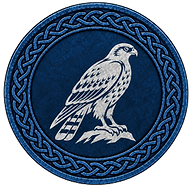
Sparrowhawk
Tags
edern-fab-nudd, arthurian, person, nudd, geraint, enid, sparrowhawk, yder, welsh-legend
Introduction - Overview
Edern fab Nudd is a knight of Welsh Arthurian tradition, best known as the opponent whom Geraint defeats in the sparrowhawk episode of Geraint and Enid. His name identifies him as a son of Nudd, and Culhwch and Olwen places him beside Gwyn ap Nudd in Arthur's company. Elsewhere he appears as a leader and counsellor rather than an enemy: The Dream of Rhonabwy presents him at the head of the men of Denmark in its imagined Arthurian muster. Forms such as Hiderus and Yder connect him with the Latin and French traditions, while the figure labelled Isdernus at Modena is commonly associated with the same family of names. These appearances belong to different works, not one continuous biography. The saint Edern of Welsh church dedications should not automatically be identified with this knight. His significance lies in the movement of an Arthurian name between tales, languages and images, with each retelling assigning him a somewhat different role.
Gallery
Main Article - Who or What was...
Edern fab Nudd
Culhwch and Olwen includes Edern son of Nudd among Arthur's companions, next to Gwyn ap Nudd. Their patronymic and the pairing suggest a brotherly relationship, although the brief notice does not tell a story about their childhood or establish Edern as a god. Wider comparisons involving Nudd, Lludd and other figures belong to the interpretation of Welsh mythology. They should not be used to assemble an unquestionable divine family tree. Edern enters this tale as a member of Arthur's remarkable company, not as the hero of a separately narrated adventure.
His fullest familiar Welsh episode begins when a knight's dwarf strikes Guinevere's attendant and then Geraint. Unable to answer properly while unarmed, Geraint follows the party. He finds lodging with the impoverished Earl Ynywl and meets Enid, whose beauty becomes central to the contest ahead. A sparrowhawk is offered as the prize in a challenge involving the knights' ladies. Edern is the established champion whom Geraint confronts. The hawk's role is that of a contested prize, not evidence that Edern habitually rides with it on his wrist.
After a prolonged combat, the defeated knight names himself Edern son of Nudd. Geraint requires him to go to Arthur's court with his companion and dwarf and answer for the earlier insult. Guinevere is not standing at the battlefield to plead for his life. At court she hears his account, and Arthur's household arranges mercy, guarantees and treatment for his wounds. Edern later accompanies Geraint among the company travelling towards Cornwall. The story therefore moves beyond defeat to his reintegration among Arthur's people, rather than ending with a nameless enemy discarded after the tournament.
The Dream of Rhonabwy places Edern in a different literary setting. He leads the men of Denmark, whose black garments have white borders, and appears among Arthur's counsellors. The elaborate colours belong to the dream's visual description; they do not describe troops whose bodies are divided into white and black halves. Geoffrey of Monmouth also includes a Hiderus son of Nu in Arthur's continental war, and Wace uses the related name Yder. These correspondences reveal the circulation of the character's name without requiring every writer to preserve identical origins, titles or deeds.
Other traditions broaden the picture. The French Yder becomes the subject of a romance, while the Modena carving labelled Isdernus is associated with this knight in discussions of early Arthurian imagery. Its interpretation should not be turned into proof that every later story had already existed unchanged. A Brent Knoll giant-fighting episode appears in an interpolation in the Glastonbury history attributed to William of Malmesbury, not simply in a securely dated original passage by William himself. Welsh dedications to a saint Edern, meanwhile, include a figure with a different patronymic, Edern ap Beli. Distinguishing that saint from Edern fab Nudd preserves the knight's literary identity without treating every occurrence of the name as one life.
Summary
Edern fab Nudd is the legendary Arthurian knight defeated by Geraint in the sparrowhawk contest and later received at Arthur's court. Welsh tales also place him beside Gwyn ap Nudd and among the leaders in Rhonabwy's dream. Related Hiderus and Yder forms extend the name into other languages, with the Modena figure Isdernus commonly discussed alongside them. These traditions should not be flattened into a single biography or an unquestioned divine ancestry. The saint Edern ap Beli and other namesakes remain distinct from the knight whose role changes between challenger, companion and counsellor.
Now enter the Mythopouch World!
You’ve discovered:
Edern fab Nudd
From Myth to Game
Join to access FREE real-world mythology "Learn Quests" and "Courses". Sign up to the newsletter for new releases, game updates, insider news, and more as Mythopouch brings real mythology to life. EARN the right to purchase an offline board game by completing FREE modules.


It's FREE to join as a MEMBER!
Not ready to join? Get the newsletter instead below


Looking for others?
Click into the field below to search, or click the icon to go to full page search function!

Looking for Mythology Insights?


Click below to view our mythology blog article insights, where we delve into the current Mythopouch Tier regions, and what we think you should know!
Sources & Retellings
Explore the original mythological Source texts (most from over 75 years ago, some as translated, possibly with mature content) and Mythopouch's source Retellings (a modern retelling also suitable for 15+) connected to this mythological entity. We are growing this resource and will link these in the future; for now, check the References below, then find the Sources or Retellings on those pages!


References
Validation References:
- The Mabinogion, translated by Lady Charlotte Guest: Geraint son of Erbin, The Dream of Rhonabwy, and Culhwch and Olwen.
- https://www.gutenberg.org/files/5160/5160-h/5160-h.htm
- P. C. Bartrum, A Welsh Classical Dictionary, Edern ap Nudd, printed pp. 252-253; Edern ap Beli, pp. 251-252 - textual roles, Latin/French forms, Glastonbury interpolation and separate saint.
- https://www.library.wales/fileadmin/docs_gwefan/new_structure/discover/digital_exhibitions/printed_material/welsh_classical_dictionary/05_D-E-F.pdf
- Geoffrey of Monmouth, Historia Regum Britanniae X.4; Wace, Roman de Brut - names cross-checked through Bartrum, not every passage independently collated.
- Chrétien de Troyes, Erec et Enide; Romanz du reis Yder; Modena archivolt - comparative traditions, not a single biographical sequence.
- Rachel Bromwich, Trioedd Ynys Prydein (2006).
Cultural Context Notice
Mythology developed across different cultures, periods and traditions, and there is rarely one universally accepted version of a story. Mythopouch approaches these traditions with respect while remaining faithful to the complexity of the surviving material. Retellings and educational content may interpret or adapt historical sources, but are not presented as definitive accounts of any culture, religion or belief system.