The Homeric Hymns
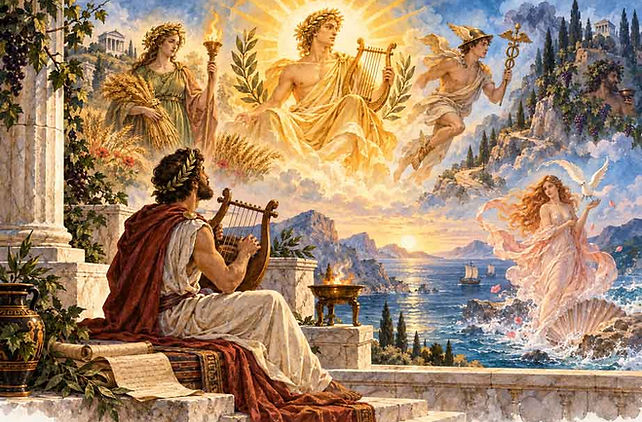
The Homeric Hymns

Greek
The Homeric Hymns
Name in Non-English, or Alternative Name/s
Homeric Hymns; The Homeric Hymns; Hymns traditionally attributed to Homer; Homeric Hymns and Homerica
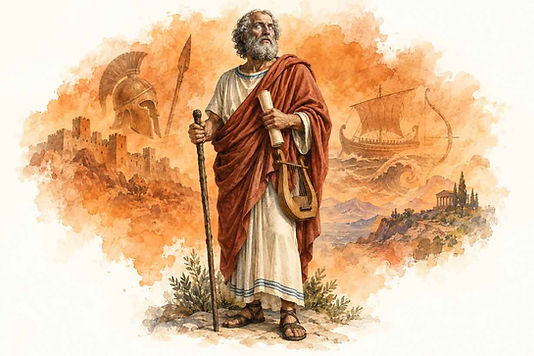
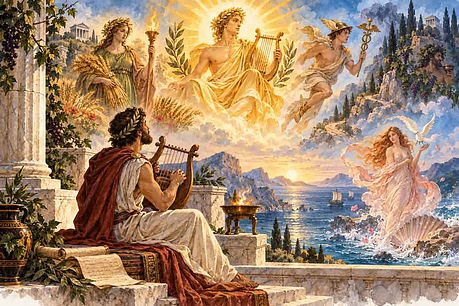
Mythopouch artistic interpretations
English Edition Translation used on this Page
Hugh G. Evelyn-White · 1914 · William Heinemann / The Macmillan Co.
Time Period
Anonymous ancient Greek hymns from the archaic and early classical traditions, composed at different times. Public-domain English reading witness: Hugh G. Evelyn-White, 1914.
Introduction - Overview
The Homeric Hymns are a collection of thirty-three ancient Greek hymns addressed to gods and divine figures. They were transmitted under the name of Homer, but the collection represents the work of multiple anonymous poets rather than a single author.
The hymns vary greatly in length. Major narrative hymns to Demeter, Apollo, Hermes, Aphrodite and Dionysus preserve extended mythic episodes, while many of the shorter hymns offer compact invocations, descriptions and prayers to individual deities.
Mythopouch uses Hugh G. Evelyn-White's 1914 English translation as its public-domain reading witness. The source PDF is the Loeb volume Hesiod, The Homeric Hymns and Homerica, published by William Heinemann in London and The Macmillan Co. in New York.
The Work...
The Homeric Hymns
The collection contains thirty-three hymns. Their subjects include Dionysus, Demeter, Apollo, Hermes, Aphrodite, Ares, Artemis, Athena, Hera, the Mother of the Gods, Heracles, Asclepius, the Dioscuri, Pan, Hephaestus, Poseidon, Zeus, Hestia, the Muses, Earth, Helios and Selene.
The longer hymns are especially important as mythological witnesses. The Hymn to Demeter tells of Persephone's abduction, Demeter's grief and the establishment of the Eleusinian Mysteries. The Hymn to Apollo combines traditions of Apollo's birth on Delos with the foundation of his oracle at Pytho. The Hymn to Hermes follows the god from his birth through the invention of the lyre, the theft of Apollo's cattle and his reconciliation with Apollo. The long Hymn to Aphrodite tells of Aphrodite and Anchises and the promised birth of Aeneas.
Other hymns are much shorter and function as invocations or devotional openings and closings. Together they preserve early Greek ideas about divine powers, cult places, genealogy, ritual, music, travel, kingship, protection and the relationship between gods and mortals.
The title Homeric does not mean that all thirty-three hymns were written by Homer. The name reflects their traditional association with Homeric epic language and performance. Individual hymns were composed at different times and preserve different local and poetic traditions.
The public-domain source witness used by Mythopouch is Hugh G. Evelyn-White's 1914 translation in Hesiod, The Homeric Hymns and Homerica. The Mythopouch retelling keeps the hymn text separate from the modern prose retelling so readers can compare the source wording with the educational version.

Summary
The Homeric Hymns are thirty-three ancient Greek hymns to gods and divine figures, traditionally associated with Homer but composed by multiple anonymous poets. Mythopouch uses Hugh G. Evelyn-White's 1914 translation as its public-domain English source witness.
Source Note
The ancient Greek Homeric Hymns are public domain. Hugh G. Evelyn-White's 1914 English translation is also public domain. The Mythopouch retelling is original educational wording and is separate from the historical translation. Mythopouch commentary and original imagery are © Mythopouch.