The History of the Kings of Britain

The History of the Kings of Britain

Arthurian
The History of the Kings of Britain
Name in Non-English, or Alternative Name/s
Historia Regum Britanniae; The British History; Geoffrey of Monmouth's British History; History of the Kings of Britain
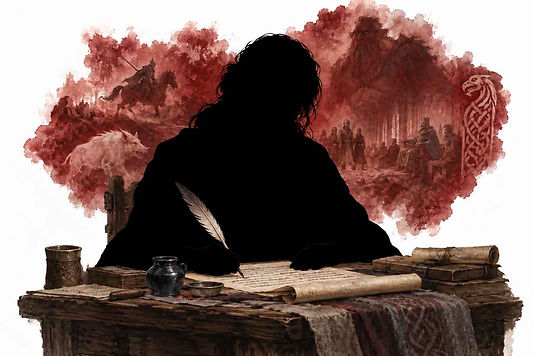

Mythopouch artistic interpretations
English Edition Translation used on this Page
Aaron Thompson; revised and corrected by J. A. Giles · 1842 · James Bohn
Time Period
Composed in Latin in the twelfth century, approximately 1136. Historical English witness: Aaron Thompson translation, revised by J. A. Giles, 1842.
Introduction - Overview
The History of the Kings of Britain, or Historia Regum Britanniae, is Geoffrey of Monmouth's influential twelfth-century account of Britain's legendary past. It runs from Brutus, the supposed Trojan founder of Britain, through Leir, Belinus and Brennius, Vortigern, Merlin and Uther Pendragon to Arthur, Mordred, Cadwallader and the final loss of British rule.
The downloadable historical English witness is the 1842 edition titled The British History of Geoffrey of Monmouth, translated from the Latin by Aaron Thompson and revised and corrected by J. A. Giles. It presents the work in twelve books and is supplied as a public-domain historical source.
The Work...
The History of the Kings of Britain
Geoffrey frames his work as a continuous history of the rulers of Britain. In his dedication he says that Walter, archdeacon of Oxford, gave him an ancient book in the British tongue and that he translated its account into Latin. The narrative begins with Brutus, a descendant of Aeneas, who leads exiled Trojans to Albion, defeats its giants, names the island Britain and establishes New Troy on the Thames.
The early books trace a long legendary succession of rulers. Among the best-known episodes are Leir and his three daughters, the laws of Dunwallo Molmutius, the rivalry of Belinus and Brennius, and Geoffrey's reworking of Roman encounters with Britain. The chronicle mixes invented genealogy, biblical and classical synchronisms, place-name explanations, remembered traditions and medieval political ideas into a single national story.
The middle books bring the narrative towards the recognisable Arthurian world. Vortigern invites Hengist and Horsa into Britain; the Saxons expand their power; Merlin reveals the red and white dragons and delivers his prophecies; Aurelius Ambrosius and Uther Pendragon fight for the kingdom; and Merlin is credited with moving the Giants' Dance from Ireland to the burial place of the murdered British nobles near Salisbury.
Arthur dominates Books IX and X. Geoffrey describes his wars against Saxons, Picts and Scots, his wider conquests, his court at the City of Legions, his conflict with the Roman power and the betrayal of Mordred. Arthur is mortally wounded after the final battle at the river Cambula and carried to Avalon, while Constantine succeeds him. The final books follow the decline of British rule through later kings to Cadwallader.
The work is enormously important to Arthurian tradition, but it should not be read as a reliable factual chronicle of early Britain. The 1842 editor explicitly states that the volume is not presented as an authentic narrative and treats much of the early royal sequence as fabulous. Its importance lies in the stories, characters and historical imagination it transmitted to later writers.
The 1842 witness used by Mythopouch was translated by Aaron Thompson, whose English version first appeared in 1718, and revised by J. A. Giles. The title page identifies the London publisher as James Bohn. This edition preserves the twelve-book structure used for the accompanying Mythopouch retelling.

Summary
Geoffrey of Monmouth's twelfth-century legendary history of Britain, from Brutus and Leir through Merlin and Arthur to Cadwallader. This page supplies the public-domain 1842 English edition.
Source Note
Geoffrey of Monmouth's medieval Latin work is public domain. The English witness supplied here is the 1842 James Bohn edition translated by Aaron Thompson and revised by J. A. Giles. The exact b29349850 scan has been identified with a Public Domain Mark and as free of known copyright restrictions. It is therefore suitable for Mythopouch to host as the historical source file.