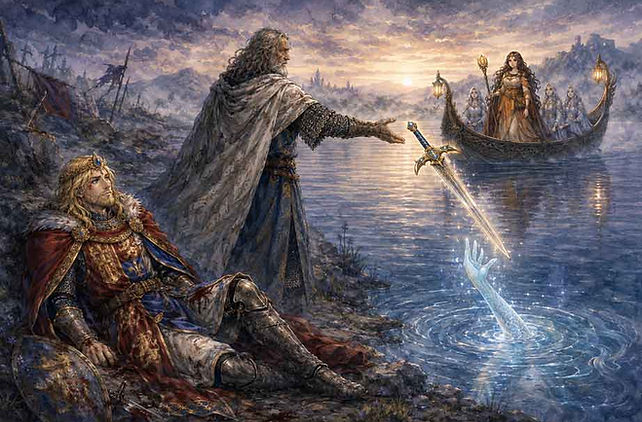
Retelling Le Morte d'Arthur: Sir Thomas Malory

Arthurian
Introduction
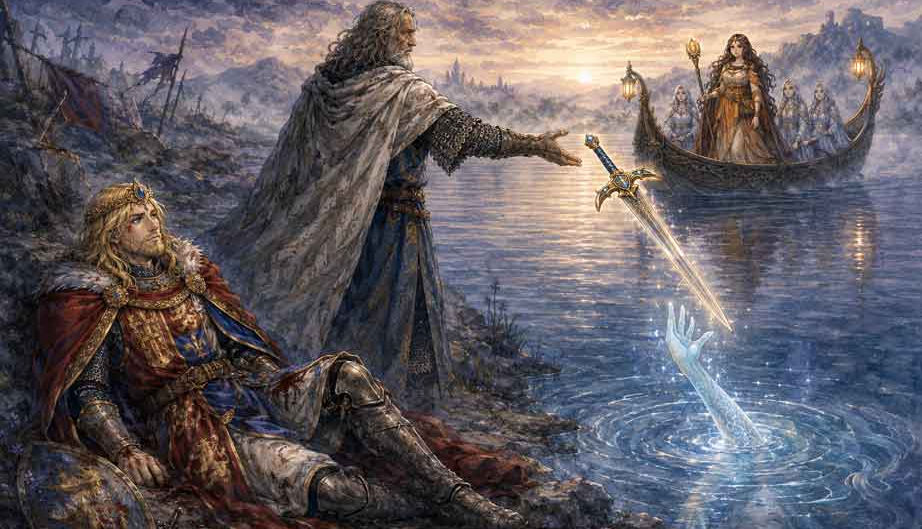
This is the Mythopouch retelling of Sir Thomas Malory's Le Morte d'Arthur. It is a modern educational narrative of the Arthurian cycle: Arthur's rise, the fellowship of the Round Table, the adventures of its knights, the Grail quest and the final breaking of the kingdom. It is written for readers aged 15 and up.
It is not Malory's 15th-century English text and it is not the 1906 Everyman's Library edition used on the Sources page. Those historical texts remain available separately. This page is Mythopouch's own modern wording.
What this retelling is
Le Morte d'Arthur gathers a large body of Arthurian romance into one long prose cycle. It is essential source material, but its older English, repeated adventures and complicated sequence can make it difficult for a modern reader to follow as one story. This retelling keeps the major narrative spine while presenting the cycle in clearer modern English.
The retelling is divided into three volumes:
1. The Rise of Arthur
2. Knights and the Grail
3. The Fall of the Fellowship
A full PDF is also available for readers who want the complete retelling in one file.
How to use it with the Sources page
Use Le Morte d'Arthur (Sources) when you need Malory's historical text, the public-domain reading edition, or a chapter reference behind a Mythopouch record.
Use this page when you want the Arthurian cycle as a modern continuous reading text. Mythopouch entity pages can point to both: Malory for the historical witness and the retelling for the readable modern version.
Malory's medieval stories are public domain. The sentences on this page are Mythopouch's.
Summary
A 15+ Mythopouch retelling of Sir Thomas Malory's Le Morte d'Arthur: three volumes covering Arthur's rise, the knights and Grail, and the fall of the fellowship. Original Mythopouch wording, 2026.
Copyright Note
Mythopouch original educational wording. Copyright Mythopouch 2026. Sir Thomas Malory's medieval text is public domain. This retelling is not the 1906 Everyman's Library edition.