Greek Mythology List


Welcome to the Mythopouch list of Greek mythology entries! We also delve into the ancient history of Greece and the surrounding areas. From heroes to goddesses, places. monsters, artifacts, weapons, creatures and more - which will only grow over time. Mythopouch provides real-world information extracted from the original source material such as that from: Homer, Hesiod, Apollodorus, Ovid, Pausanias, Pindar, Aeschylus, Sophocles, Euripides, Hyginus, Diodorus Siculus and Apollonius of Rhodes. Words and stories carry powerful messages that were passed down from one generation to the next, many of which are still very applicable to modern times. Our unique imagery is meant to capture the imagination and ignite the magic mythology spark within us all. Our "token mark" coin symbol that is assigned to each record is a visual representation of the entity, for use in Mythopouch learning modules and games.
Earn - Learn - Play
See more entries
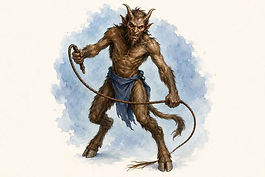
Calibos
FILM INVENTION (Clash of the Titans, 1981). No ancient Greek name exists; possibly loosely inspired by Phineus (Φινεύς).
Calibos is a fictional character created specifically for the 1981 film Clash of the Titans, produced by Ray Harryhausen and Charles H. Schneer. He does NOT appear in any ancient Greek mythological texts. The character was portrayed by British actor Neil McCarthy, with stop-motion animation effects provided by the legendary Ray Harryhausen. His inclusion here serves an important educational purpose: to distinguish between genuine figures from Greek mythology and characters invented for modern film adaptations.
In the film, Calibos is presented as the handsome young son of the sea goddess Thetis whose arrogance and cruelty earned him divine punishment. After he hunted and killed all but one of a herd of sacred winged horses (except Pegasus), Zeus transformed him into a hideous monstrosity - a creature with horns, cloven hooves, and a bestial appearance - and banished him from human society. This narrative bears some structural similarity to the myth of Actaeon (who was transformed into a stag by Artemis), but Calibos himself is a purely cinematic invention. The film Clash of the Titans is a loose adaptation of the Perseus myth, blending authentic mythological elements with original characters and plot points.

Centaur
Centaurs were mythical creatures of Greek mythology with the upper body of a human and the lower body of a horse - a hybrid form that embodied one of the most enduring themes in Greek thought: the conflict between civilization and barbarism, reason and instinct. They were said to be born of Ixion, king of the Lapiths (a Thessalian tribe), and Nephele, a cloud nymph fashioned by Zeus in the image of Hera. Ixion had attempted to seduce Hera, and the Centaurs were the result of this transgression - creatures that inherited both human intelligence and animal wildness, forever torn between the two natures.
Most Centaurs were depicted as savage and violent, inhabiting the mountains of Thessaly where they lived in tribes, armed themselves with rocks and tree branches, and hunted wild animals. They represented the untamed wilderness that surrounded Greek civilization - a constant reminder that without law, reason, and social order, human beings would revert to animalistic behavior. Yet among these wild creatures stood one remarkable exception: Chiron, a Centaur of profound wisdom, skill in medicine, and gentle character, who tutored many of Greece's greatest heroes including Achilles, Jason, and Heracles. Chiron proved that the Centaur form did not necessarily dictate savage behavior - that even within the most bestial exterior, wisdom and virtue could flourish.

Cetea
The Cetea (Greek plural: kētē, singular: kētos) were the great sea monsters of Greek mythology, massive creatures of the deep sent by Poseidon to wreak havoc upon coastal lands and devour those who incurred the sea god's wrath. The term ketos (κῆτος) functioned both as a generic category for any large sea monster and as the specific name of the most famous individual: the Ketos Aithiopios (Cetus Aethiopius), the Ethiopian Sea Monster sent to ravage Ethiopia as punishment for Queen Cassiopeia's hubristic boast that her daughter Andromeda was more beautiful than the Nereids, the sea nymphs who attended Poseidon. When the most celebrated of the Cetea was slain by Perseus to rescue Andromeda, it was immortalized among the stars as the constellation Cetus (the Whale), where it remains visible in the northern winter sky.
The Cetea represented the personification of the sea's most terrifying quality: its capacity to produce creatures of incomprehensible size and destructive power, emerging without warning from the depths. Unlike the clearly defined, individually named monsters of Greek mythology-Cerberus, the Hydra, the Chimera-the Cetea were both a category and an ever-present threat, one of the dangers that made sea travel and coastal life perpetually perilous. They served as Poseidon's instruments of vengeance, literal embodiments of his wrath against mortals who offended him or his divine associates.

Chaos
Chaos is the primordial void from which all things emerged in Greek cosmogony. According to Hesiod's Theogony, Chaos was the first thing to exist-an infinite, formless abyss, a yawning gap that held the potential for all creation. The name derives from the Greek verb meaning "to yawn" or "to gape," describing not disorder but the vast emptiness before order existed.

Charites
The Charites, known in English as the Three Graces, were among the most beloved goddesses in the Greek pantheon. These three sisters - Aglaea (Splendour), Euphrosyne (Joy), and Thalia (Festivity) - embodied the finest qualities that made life worth living: beauty, charm, grace, and creative joy. Hesiod, in his Theogony, names them as daughters of Zeus and Eurynome (a daughter of Oceanus), though other traditions give different parentages. They dwelt on Olympus alongside the Muses and were constant companions of Aphrodite, the goddess of love.
Each of the three Charites presided over a specific aspect of beauty and delight. Aglaea, whose name means "radiance" or "splendor," was the goddess of beauty, glory, and adornment - she later became the wife of Hephaestus after his divorce from Aphrodite. Euphrosyne embodied good cheer, mirth, and the joy of living. Thalia brought festivity, abundance, and rich banquets. Together, they wove charm into the fabric of existence, gracing the world with pleasure and refinement.

Charybdis
Charybdis was one half of the most infamous navigational hazard in Greek mythology-a monstrous whirlpool dwelling in the narrow Strait of Messina, directly opposite the multi-headed sea monster Scylla on the Calabrian shore. Together, Scylla and Charybdis created a passage so perilous that avoiding one meant falling prey to the other, giving rise to the enduring proverb "between Scylla and Charybdis" to describe any choice between two equally dangerous alternatives. While Scylla reached out to snatch sailors from passing ships, Charybdis threatened to swallow entire vessels into her watery maw-a natural phenomenon personified as a female monster of terrifying scale and regularity.
According to the standard mythological genealogy, Charybdis was the daughter of Poseidon, god of the sea, and Gaia, the earth goddess-a lineage that made her a force of elemental power straddling the boundary between sea and land. She was not born a monster, however. In one prevalent tradition, she was originally a beautiful nymph who incurred the wrath of Zeus-some sources say for stealing the cattle of Heracles-and was transformed into a sea monster as divine punishment. Zeus condemned her to a fate of perpetual, cyclical consumption: three times each day, she swallowed a vast volume of seawater, and three times she vomited it back, creating whirlpools capable of dragging ships and their crews to destruction.

Chimera
The Chimera was one of the most terrifying monsters in Greek mythology - a fire-breathing hybrid creature composed of three different animals: the head and front body of a lion, the midsection and rising head of a goat, and the tail of a serpent (or dragon). Its name derives from the Greek chimaira, meaning "she-goat," though this etymology belies the creature's fearsome nature. Born from the union of Typhon - the most monstrous being in Greek mythology - and Echidna, the "Mother of Monsters," the Chimera belonged to a terrible lineage that included Cerberus, the Hydra, and the Sphinx.
In Hesiod's Theogony, the Chimera is described as "a thing of immortal make, not human, lion-fronted and snake behind, a goat in the middle, and snorting out the breath of the terrible flame of bright fire." It terrorized the region of Lycia in ancient Anatolia, ravaging the countryside, destroying crops, and killing livestock and people indiscriminately. The monster's three heads gave it a near-360-degree field of vision, while its fiery breath made it impossible to approach safely. The Chimera was raised by Amisodarus, king of Caria, to be "a bane to humankind" - a weapon of mass destruction that embodied the unnatural perversion of the natural order.

Circe
Circe is a powerful goddess and sorceress, the daughter of Helios (the sun god) and the Oceanid Perse. She rules the island of Aeaea, where she practices pharmakeia-magic involving herbs, potions, and transformative spells. She is the sister of King Aeëtes of Colchis and the aunt of Medea, connecting her to the great magical lineage of Greek mythology.

Cornucopia
The Cornucopia, or Horn of Plenty, is one of the most enduring symbols from Greek mythology, representing abundance, nourishment, and the infinite generosity of the gods. Its origins lie in the infancy of Zeus, the king of the gods. When the infant Zeus was hidden away on the island of Crete to protect him from his father Cronus - who had been devouring his children - he was nursed and cared for by a divine goat named Amalthea. This nurturing creature provided the young god with milk that sustained him through his formative years.
The Cornucopia came into being when one of Amalthea's horns broke or was accidentally snapped off. In some versions, the young Zeus himself broke the horn while playing too roughly. Where an ordinary goat would simply lose its horn, Amalthea was no ordinary creature - her broken horn magically became a vessel of endless bounty, forever overflowing with whatever food, drink, or goods its possessor desired. This miraculous horn passed into the keeping of Zeus and became a sacred symbol of divine abundance.

Cronus
Cronus is the youngest of the primordial Titans, the son of Uranus (Sky) and Gaia (Earth). He overthrew his father by castrating him with a sickle forged by Gaia, fulfilling her vengeance against Uranus for imprisoning their children-the Cyclopes and Hecatoncheires-in Tartarus. After seizing power, Cronus ruled during the mythical Golden Age, a time of peace and prosperity.

Cyclops
The Cyclopes of Greek mythology were three primordial brothers of immense power and skill - Brontes (Thunder), Steropes (Lightning), and Arges (Bright) - whose single eyes and massive frames made them both objects of fear and indispensable craftsmen to the gods. As sons of Uranus (Sky) and Gaia (Earth), they belonged to the first generation of divine beings, older than the Titans themselves. Each brother's name evoked the elemental force he would later help forge into Zeus's most fearsome weapon.
Their father Uranus, disgusted by their monstrous appearance - each had a single round eye in the center of his forehead - cast them into Tartarus along with their brothers, the Hecatoncheires (Hundred-Handers). There they remained imprisoned until Zeus, seeking allies for his war against the Titans, freed them. In gratitude, the three Cyclopes became the master smiths of Olympus, forging the thunderbolt for Zeus, the trident for Poseidon, and the helm of invisibility for Hades - three of the most powerful objects in all of Greek mythology. These were not crude weapons but divine instruments that enabled the Olympians to establish their eternal rule.

Demeter
Demeter is the Olympian goddess of agriculture, grain, harvest, and the fertility of the earth. As the daughter of Cronus and Rhea, she is one of the six original Olympians. Her most important myth-the abduction of her daughter Persephone-provides the divine explanation for the cycle of seasons and the annual death and rebirth of vegetation.